Case 5: Nationwide - V4Sport Foundation
Name of project / programme:
Year of start / opening:
Country:
Target group:
Age:
City size:
Type of sport:
Let’s Play Together
2024
Poland
Children and young people, including those with disabilities, from migrant (Ukraine) backgrounds, and experiencing social or economic disadvantage as well as Polish children and young people
Children and adolescents
more than 100.000 inhabitants ((project implemented in urban and semi-urban locations))
Multi-sport, inclusive games, adapted physical activity
Content of project / programme
Short description:
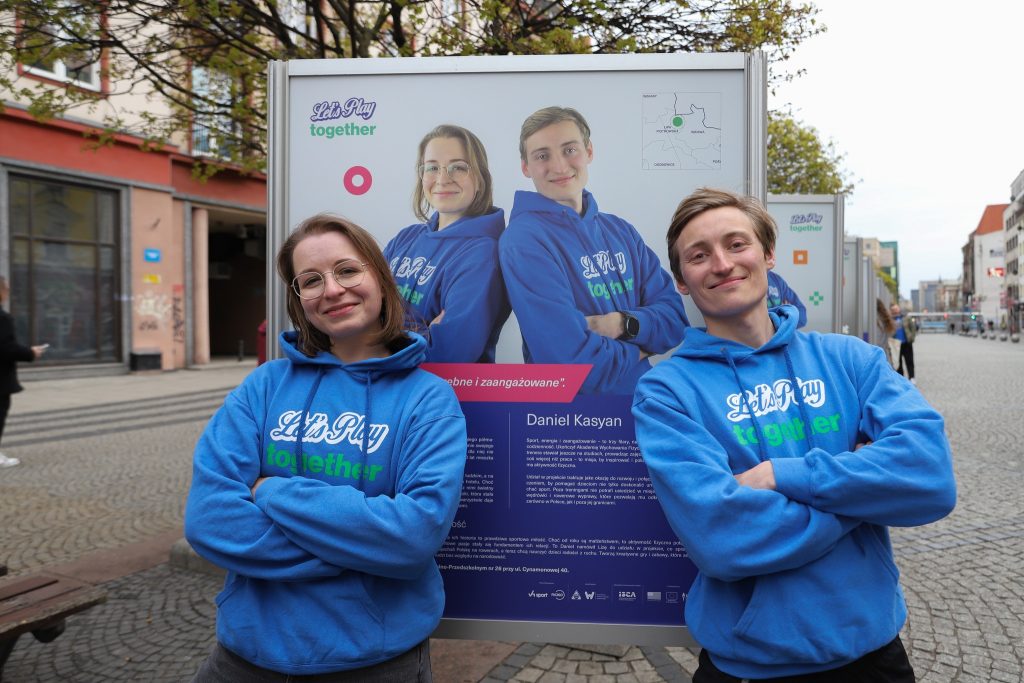
Let’s Play Together is an inclusive sport programme coordinated by the V4Sport Foundation. It creates accessible and safe environments where children and young people from diverse backgrounds can engage in physical activity together. The initiative includes sport festivals, school-based programmes, and community workshops focused on social integration through play.
Long description:
Let’s Play Together is an initiative launched in 2024 by the V4Sport Foundation, a Polish NGO with longstanding experience in designing and scaling innovative approaches to sport-based inclusion. Building on the Foundation’s earlier work—including the ‘Activity for All’ model, ‘Open Playgrounds’, and partnerships with international organisations like TAFISA and EOSE—the programme aims to improve integration of socially excluded children through non-competitive, inclusive sport and play.
The programme is implemented in collaboration with schools, municipalities, and local NGOs. Its activities include inclusive sport events, open play sessions, and capacity-building workshops for teachers and coaches. One of its core components is co-designing activities with children, ensuring that their voices are reflected in how sport sessions are structured.
Let’s Play Together is part of a broader commitment by V4Sport to promote equity, diversity, and inclusion in the Polish sport sector. Its methodology builds on universal design principles and draws from successful models piloted in previous Erasmus+ and national projects. The initiative uses publicly accessible spaces, such as schoolyards and parks, and involves local actors in sustaining long-term engagement.
Funding is sourced from international cooperation projects. The initiative is monitored through participatory evaluation tools, including feedback from children, teachers, and community facilitators.
Aspects of good practice:
This practice is considered a good example due to:
– Its continuity with previous inclusive sport models developed by V4Sport;
– Its application of universal design and co-creation approaches;
– Its focus on local partnerships with schools and NGOs;
– Its combination of sport delivery with educational and community engagement strategies;
– Its sustainability approach through institutional partnerships and multi-source funding.