Case 6: Głogów
Name of project / programme:
Year of start / opening:
Country:
Target group:
Age:
City size:
Type of sport:
Trener Osiedlowy (Neighbourhood Coach)
2019
Poland
Children and adolescents from urban neighbourhoods, with a focus on areas with limited access to organised sports
Children and adolescents (approx. 6–16 years old)
more than 100.000 inhabitants
Ball games (primarily football), general physical activities
Content of project / programme
Short description:
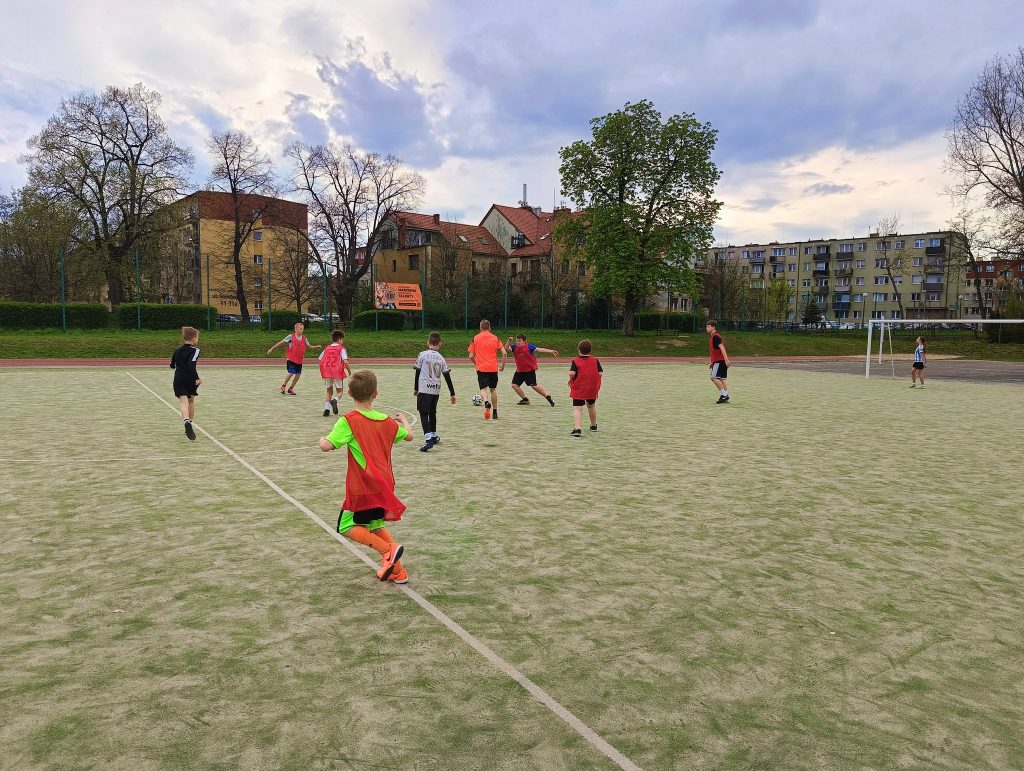
The ‘Trener Osiedlowy’ project is a sport-based social initiative run by Chrobry Głogów S.A., a professional football club. It delivers free, locally accessible physical activity sessions for children and young people in selected neighbourhoods of Głogów, in cooperation with local schools and the city authorities
Long description:
The ‘Trener Osiedlowy’ programme has been implemented in Głogów since 2019. It is coordinated by the football club Chrobry Głogów S.A., in cooperation with the City of Głogów and local partner institutions such as schools and the NGO Stowarzyszenie Szansa. The aim is to promote physical activity and support social development of children and adolescents, particularly those who are not involved in organised sport structures.
The programme is based on regular, free-of-charge sports sessions delivered in accessible locations—mainly school playgrounds and local sports fields. In 2023, the initiative reached over 300 children across multiple neighbourhoods. Activities are conducted by licensed coaches employed by the club and additionally trained in child safeguarding practices.
The programme is fully financed by the City of Głogów. In 2024, the municipal budget allocated 110,000 PLN (~€25,000) to the project. The funds cover coach remuneration, equipment, and coordination. In-kind support is provided by schools and other local institutions, which allow the use of facilities and help with participant recruitment.
Monitoring and evaluation are conducted informally through coach reports and stakeholder feedback. Interviews conducted with school representatives and municipal officials confirm that the initiative has improved physical activity levels among children and fostered cooperation between education and sport sectors. A key element of the initiative’s success is the long-standing relationship between the club and local authorities.
The programme remains relatively small in scale and operates without permanent infrastructure or strategic evaluation. Its continuity depends on annual public funding decisions and engagement of coaches and local partners.
Aspects of good practice:
This practice is considered a good example due to:
– Its long-term and institutionalised partnership between a professional football club and local authorities
– Use of existing public infrastructure with minimal investment needs
– Specific focus on local community needs and children not engaged in mainstream sport
– Regular delivery of sessions and sustained contact with participants
– Inclusion of safeguarding and child development components in coach training