Case 5: San Sebastián
Name of project / programme:
Year of start / opening:
Country:
Target group:
Age:
City size:
Type of sport:
Hegalak
2012
Spain
people with disabilities
youth, adults, seniors
more than 100.000 inhabitants
Exercises to enhance general fitness / health
Content of project / programme
Short description:
Hegalak is an inclusive sports center in San Sebastián that promotes physical activity adapted for all people, regardless of physical condition, disability, or socioeconomic status. Its unique strength lies in the synergy between the private management company, Kirola eta Gaitasuna, and the Fundación Hegalak Zabalik. The foundation funds adaptive and inclusive sports programs—such as pilot projects and essential services for highly dependent individuals—that are socially vital but not economically viable from a purely commercial standpoint. With individualized programs and a high-performance training service for athletes with disabilities, Hegalak offers an accessible space managed with an inclusive approach. It stands out for its AENOR certification (2015), which recognizes its comprehensive accessibility in both infrastructure and management. Currently, it serves 2,200 active users, including 300 in specialized health groups, and employs 38 specialized professionals.
Long description:
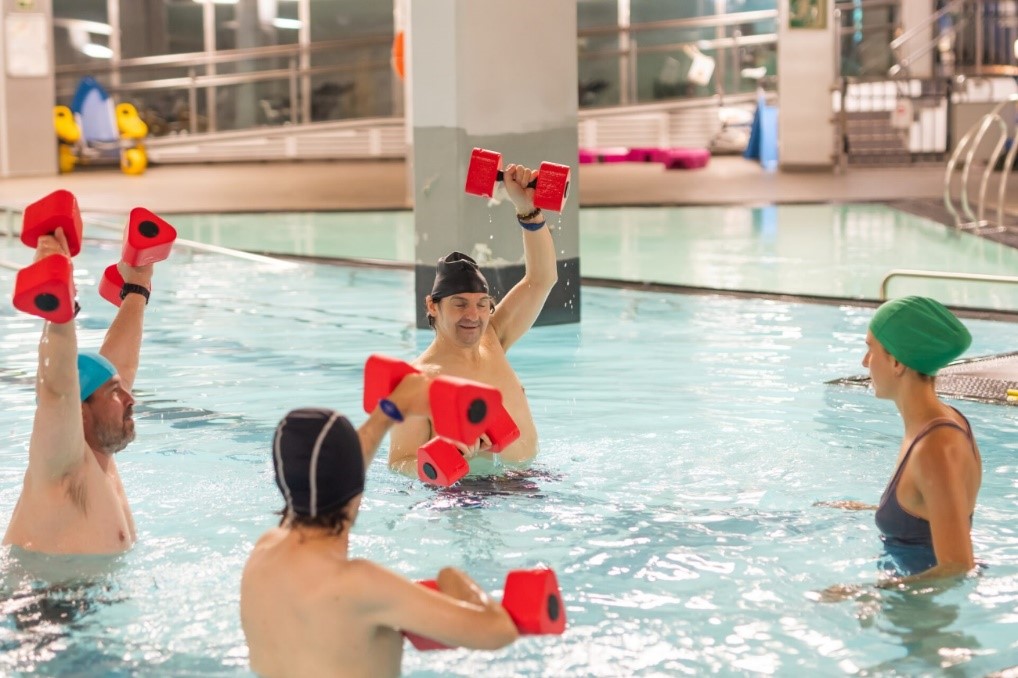
Hegalak is a pioneering inclusive sports project that has revolutionized the traditional concept of accessibility from its base in San Sebastián. The essence of its model lies in “reverse inclusion”: a space designed from the ground up for people with disabilities where, by design, everyone else fits perfectly too. In other words, it is a sports center with universal design, created for all people to use, with or without disabilities. This groundbreaking philosophy has created a unique environment where coexistence between people with and without disabilities becomes completely natural.
A cornerstone of Hegalak’s success and sustainability is the effective synergy between the private company that manages the center, Kirola eta Gaitasuna, and the Fundación Hegalak Zabalik. This partnership allows Hegalak to operate programs that would otherwise be unsustainable. The foundation finances adaptive and inclusive sports initiatives, which often include pilot projects that are later adopted by the management company once their viability is proven, as well as essential programs—like physical activity for highly dependent individuals—that are socially necessary but not economically profitable on their own. This model ensures that both innovative and critical services can be offered long-term.
The center places health at the heart of its approach. Movement becomes therapy: from functional rehabilitation programs to activities that improve mental health, all supported by a multidisciplinary team of 38 professionals (doctors, physiotherapists, coaches). The public-private sponsorship system and collaboration with public entities like Osakidetza have enabled the creation of specialized health groups serving 300 participants.
A key milestone was obtaining the AENOR universal accessibility certification in 2015, becoming the first sports center in Spain certified for both infrastructure (universal design in doors, flooring, and signage) and management. This recognition strengthens its personalized care model, which ranges from inclusive classes across various disciplines to high-performance training programs for Paralympic athletes.
Hegalak’s impact multiplies through its network collaboration with public entities (Osakidetza, Provincial Council), sports federations, and private companies. It functions as a reference hub: when other municipalities cannot address specific cases, users follow personalized programs at the center before returning to their communities with greater autonomy. This synergy, combined with active communication (media campaigns, social media), has been crucial for disability visibility.
With 2,200 active users and near-full capacity, the project has exceeded all expectations. Its success stems not only from the aforementioned aspects but also from the balance between technical innovation (cutting-edge, well-located facilities) and human warmth/quality, sustained by a mixed economic model (public subsidies and private sponsorships). More than a sports center, Hegalak is a catalyst for social change where sport becomes a tool for health, authentic inclusion, and community transformation.
Aspects of good practice:
- Participation of target group and real inclusion
- Meaningful involvement of target group
- Long-term participation
- High quality of collaboration / co-creation
- Sharing knowledge
- Constant evaluation of project
- Sustainability
- Financial sustainability
- Clear goals, e.g. inclusion, empowerment, etc.
- Internal and external capacity building
- Individualized adaptation
- Health-focused approach
- Inclusive infrastructure and management
Credit: Leintz Eskola Kirola