Case 6: Oarsoaldea (Lezo-Pasaia-Oiartzun)
Name of project / programme:
Year of start / opening:
Country:
Target group:
Age:
City size:
Type of sport:
KOZ (Sport Orientation Service)
2013
Spain
ethnic minority, people with disabilities, Social-economically disadvantaged
youth, adults, seniors
more than 30.000 and less than 100.000 inhabitants
Exercises to enhance general fitness / health, Endurance sport, Playful movement, Ball games (e.g. soccer, basketball, volleyball….), Dance / creative movement, Yoga / Tai Chi Chuan / Qi Gong
Content of project / programme
Short description:
KOZ (Sport Orientation Service) is an innovative public sports guidance service that, based on scientific evidence, has established a personalized public support system to transform physical activity into a sustainable habit. With a holistic approach (addressing physical, social and psychological aspects), it has successfully extended sports opportunities to inactive populations while gradually fostering behavioral change. The program not only increases participants’ engagement in physical activity but also improves their health and enhances social inclusion – particularly for individuals at risk of social exclusion or those experiencing partial/total isolation within their local communities.
Long description:
KOZ represents an innovative model in public sports policy, combining personalized guidance with scientific evidence to address physical inactivity at its social roots. Originally launched in Gipuzkoa (Basque Country) as a municipal initiative, this service has grown into an inter-community network prioritizing vulnerable and inactive populations: seniors, women, and those affected by socioeconomic disadvantages.
The service operates through a referral system connecting health centers, municipal services, and communities. Healthcare providers, social services, or municipal offices refer inactive individuals or those with health risks to KOZ professionals, who then design customized physical activity programs with regular follow-ups. Participants may join KOZ-led group activities or be directed to local sports clubs, always with ongoing monitoring.
Unlike traditional facility-centered approaches, KOZ’s qualified professionals serve as “physical activity prescribers,” working flexibly across various settings: municipal sports centers, healthcare clinics, community centers and public spaces.
A scientific foundation supports the program, aligning with WHO’s Global Action Plan on Physical Activity (GAPPA) and using validated monitoring tools to track both participation and quality-of-life improvements. The approach emphasizes a preventive healthcare through exercise, safe socialization opportunities and community inclusion for all participants.
Despite COVID-related challenges, KOZ’s collaborative funding model (combining municipal budgets, Provincial Council support, and Osakidetza healthcare system resources) maintains most activities free of charge, removing economic barriers. Since its 2013 pilot in Irun and expansion through the Basque Government’s 2016 Mugiment program, KOZ has achieved 33 active services across 23 municipalities (2024), 3,000 participants, with 30% becoming regularly active and sustainable operations through public institutional cooperation.
This network continues evolving as a benchmark for community-based physical activation, proving that strategic partnerships and personalized approaches can successfully transform sedentary lifestyles into active, socially connected ones.
Aspects of good practice:
- Long-term participation
- High quality of collaboration / co-creation
- Constant evaluation of project
- Financial sustainability
- Science-based policy and protocols
- Real inclusion
- Smart referral system
- Scalable model
- Community empowerment
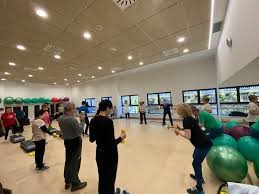
Credit: Gipuzkoako Foru Aldundia