Germany

Germany

Case 7: Oldenburg

Case 7: Oldenburg Name of project / programme: Year of start / opening: Country: Target group: Age: City size: Type of sport: ReWiS – Refugees welcome in sports 2015 Germany refugees, ethnic minority, Social-economically disadvantaged adults more than 100.000 inhabitants Exercises to enhance general fitness / health, Ball games (e.g. soccer, basketball, volleyball….), Dance / creative movement Content of project / programme Short description: Refugees welcome in sports (ReWiS) organises non-competitive ball games and fitness classes. It was funded by the programme integration through sport of the State Sport Association Lower-Saxony from 2017 – 2024. Long description: The ReWiS team offers different courses of ball games, mainly football, volleyball and basketball, taking place at regular sport facilities of the city of Oldenburg. Additionally, a fitness/dance class for women takes place at one of their partner institutions, childcare included. What was meant for refugees in the beginning – a non-competitive sport offer, free of charge, focusing on the social and fun aspect of playing together – had soon proven to be attractive for other people, as well.This led to an expansion of the original target group. There is no membership or registration necessary. People can join without commitment which is highly attractive for people with refugee or unclear residence status since their living situation can change rapidly from one day to another. An annual summer gathering with food and ball games serves as a meeting spot for people who are or used to be involved as trainers or participants, for former refugees who have now started regular jobs and still enjoy coming back to this social event. The project originated in a university seminar at the University of Oldenburg in 2014. Being very aware of the special needs and precarious situation of people with refugee status, the concept included a low-threshold approach in terms of time or financial commitment. The students were able to get in touch with refugee shelters from the area in an early stage of the project which established connection and trust. The information on the flyers and on social media was translated in several languages from the very beginning. This led to an early success of the project which was then continued after the seminar had terminated. This brought along the new challenge to organise new sport venues, because they could not use the ones at the university anymore. In order to be eligible to enter the city’s regular allocation process of sport facilities, the students founded an official sport club. Supported by the City Sport Association, the students invested a lot of voluntary resources into the programme to raise funding and to keep it running. They received several awards for their project. In terms of capacity building, they manage to involve new students via a service-learning seminar at the University. On a structural level, some of the former participants took on the role of trainers themselves and even became official members of the sport club. Some have founded their own football club in order to compete in the local league and play more seriously. Aspects of good practice: Refugees welcome in sports is considered a good practice, because… …it shows high sensitivity for the needs of their target group. …it succeeded in involving the target group on a structural level. …it created a well-functioning network of stakeholders involved with refugees. Link to the website
Germany

Case 6: Münster

Case 6: Münster Name of project / programme: Year of start / opening: Country: Target group: Age: City size: Type of sport: Coerde in Bewegung – “Coerde in motion” 2021 Germany ethnic minority, Social-economically disadvantaged children, youth, adults, seniors more than 100.000 inhabitants Exercises to enhance general fitness / health, Playful movement, Ball games (e.g. soccer, basketball, volleyball….), Dance / creative movement Content of project / programme Short description: Coerde in Bewegung (“Coerde in Motion”) is a programme with a socio-spatial focus in the city of Münster. In cooperation with (nursery) schools and other stakeholders from the social sector of the town quarter, kids get the opportunity to join a wide range of sports. Long description: Coerde in Bewegung (“Coerde in motion”) is a programme initiated by the health department of the city of Münster. It offers a wide range of sports for kids, youngsters and, in one case, a special bike riding meet up for girls and women from diverse backgrounds. Coerde is a town quarter with a low socio-economic status that had caught the municipal administration’s attention, e.g. due to the poor performance in school enrolment examinations. This called for action and the project Coerde in Bewegung was developed. Besides singular bigger events such as football matches at the local sport club or the opportunity for a local school’s football team to join the city’s football tournament, the responsible team also established the well-known concept of “Open Sundays”. This refers to the local school’s gym being opened on Sundays, so that kids with and without their parents can take part in a two-hour movement and play workshop with coaches present. Over time, some participants mastered the transition from participant to coach as they grew older. Therefore, the project succeeded in capacity building and enabled young people to take on a role of responsibility and commitment. The programme shows a strong network focus, trying to establish structures rather than singular projects. Different players from the educational and social sector and their resources are included in order to create various offers and reach different target groups within the quarter. Initiated by the health department, Coerde in Bewegung brought together the City Sport Association and the Association of socio-therapeutic facilities for the development of the programme. For the first three years, 2021-2024, it was financed by the state’s health insurance association. The second phase, another three years, 2024-2027, is financed by a funding mix by the local bank, a company and a private enterprise foundation. Aspects of good practice: Coerde in motion is considered a good practice, because… …an intensive network character brings together diverse players within the quarter and enables to reach the target group(s). …the players involved attend formats of exchange for knowledge sharing and collaboration. …the city has established community workers which are …it allows for capacity building for the institutions involved. …a three-year funding gives relatively sustainability. Link to the website

Germany

Case 5: Mülheim an der Ruhr

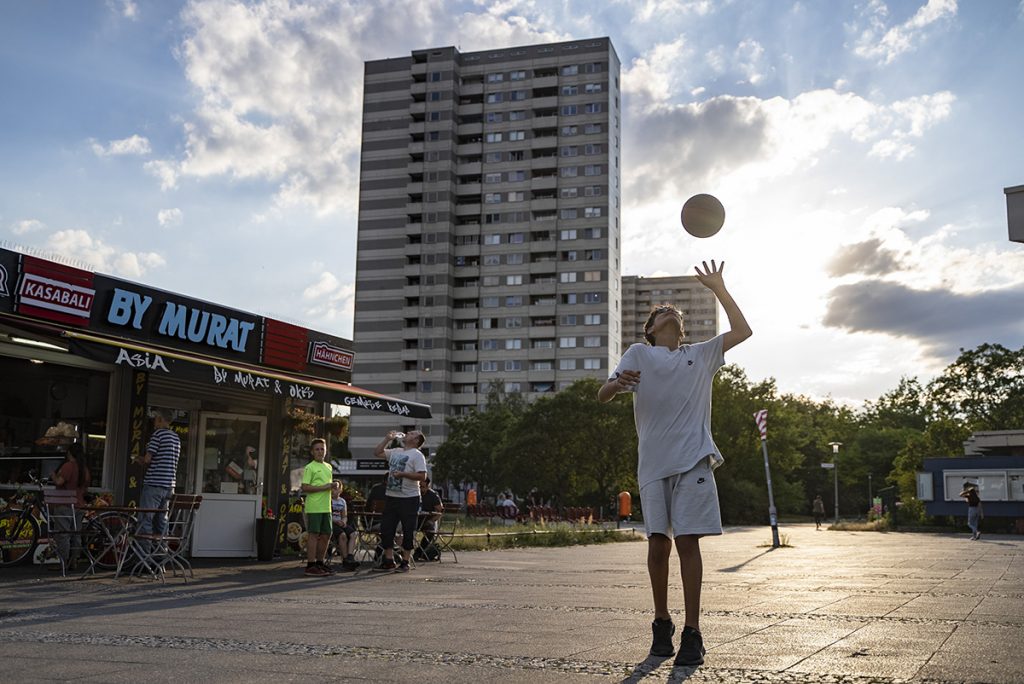
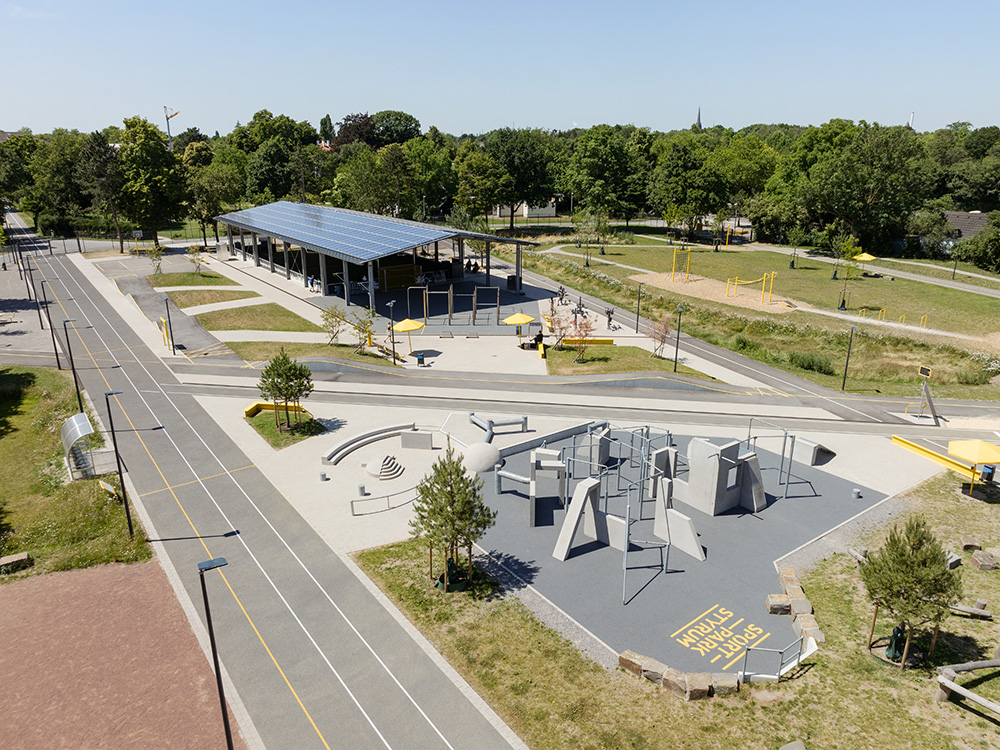
Case 5: Mülheim an der Ruhr Name of project / programme: Year of start / opening: Country: Target group: Age: City size: Type of sport: Sportpark Styrum – “Sports park Styrum” 2022 Germany ethnic minority, Social-economically disadvantaged children, youth, adults, seniors more than 100.000 inhabitants Exercises to enhance general fitness / health, Playful movement, Ball games (e.g. soccer, basketball, volleyball….), Martial Arts / Combat sports, Dance / creative movement, Yoga / Tai Chi Chuan / Qi Gong, Trend sports (Parcours, Skating, Slackline…), Bouldering / climbing, Track and field Content of project / programme Short description: The Sportpark Styrum (“sports park Styrum”) is a multi-functional sport facility well-situated in its town quarter in the city of Mülheim on Ruhr. It is open for individual use as well as for schools, kindergardens, sport clubs and also offers classes, workshops and holiday programs. Long description: The Sportpark Styrum (“Sports park Styrum”)is located right in the Styrum neighbourhood and follows a strong socio-spatial approach run by the Mülheimer SportService. In the morning, the local schools utilize it for their regular physical education classes. In the afternoon, offers by the Mülheimer SportService or other sport clubs are scheduled. It is also open for individual use, be it parents with kids or youngsters playing football in the open-air hall. Sport clubs and companies also use it for their own sport offers. The park is surrounded by a fence which is closed at night time to avoid vandalism. Ever since its planning, the Mülheimer SportService and the architectural planning bureau ensured a high level of participation of the near-by schools and the kindergarden, as well as the local sport club and other stakeholder groups such as local inhabitants or the local Parcour scene. Today, the Mülheimer SportService coordinates the weekly classes, the utilisation of the park by other user groups and as well as special occasions such as the season opening. Most offers are for free, especially the ones for kids. Some courses cost a small amount of money which is solely used to pay trainer allowances. Other expenses are covered by external funding. Two professional care takers ensure that the park remains tidy and that the equipment is used correctly. The team of the Mülheimer SportService is part of a well-functioning network of the quarter involving all kinds of stakeholders, especially from the educational sector. This way, challenges are discussed and ideas for solutions are exchanged. The Sportpark fits well into the quarter’s structure and caters to many people, especially children, who would otherwise not have the chance to get into sports and get to know a wide range of movement practices. Aspects of good practice: The Sportpark Styrum is considered a good practice, because… …it succeeds to realized a socio—spatial approach. …it reaches different kinds of target groups. …it shows a high quality of long-term cooperation and co-creation. …the sharing of knowledge is ensured by a close exchange with stakeholders in the quarter. …it is fairly financially sustainable, since the city of Mülheim managed to secure a job position for it. Link to the website Copyright: Nikolai Benner

Germany

Case 4: Filderstadt

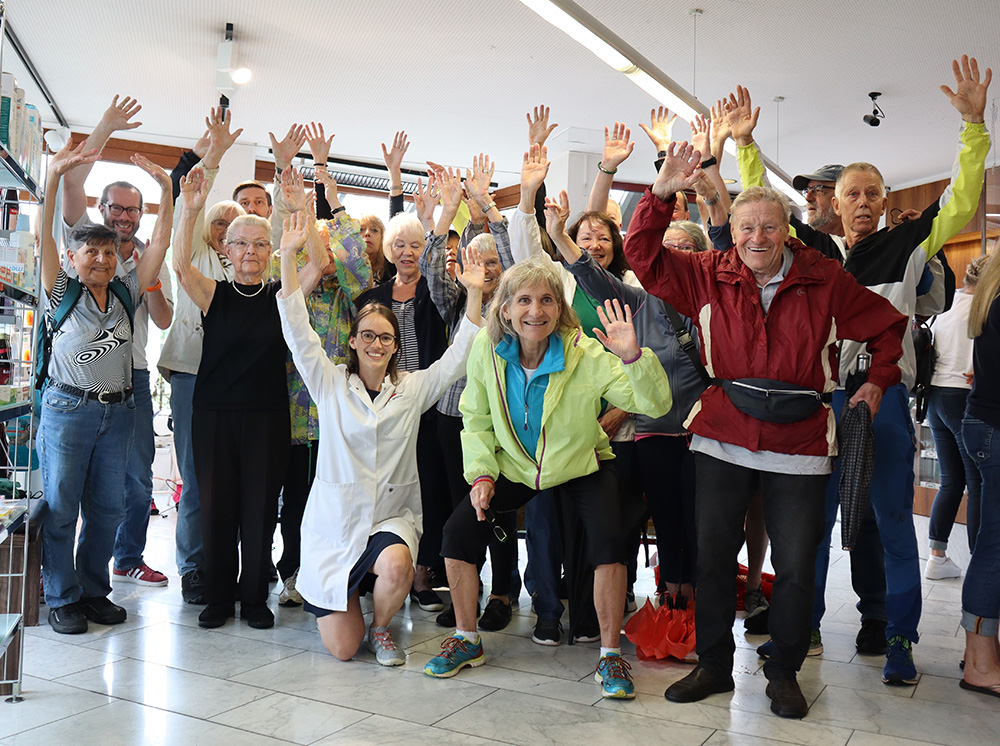
Case 4: Filderstadt Name of project / programme: Year of start / opening: Country: Target group: Age: City size: Type of sport: Bewegte Apotheke – “Pharmacy in motion” 12023 Germany seniors more than 30.000 and less than 100.000 inhabitants Exercises to enhance general fitness / health Content of project / programme Short description: The project Bewegte Apotheke (“Pharmacy in motion“) invites senior citizens to an hour long walk that includes exercises to enhance general fitness and health. Afterwards, participants gather at a pharmacy to have a drink, chat and receive valuable information on health topics. Free of charge. Long description: Every week, participants of the Bewegte Apotheke (“Pharmacy in motion”) gather at the same pharmacy to start their one hour walking tour in the city of Filderstadt. It is free of charge and the participants do not need to register beforehand. While offering the opportunity to chat and socialize, trainers also instruct exercises focusing on strength, balance and coordination. Since the beginning, the participant number is relatively stable at 20. There are always two trainers present, one walking up front, the other one in the back to ensure the groups stays together. This way, different levels of pace and fitness are included and welcome. Afterwards, participants are invited to stay at the pharmacy to have a drink, listen to a talk by the pharmacist on an up to date topic (e.g. flu shots in fall) and socialize. The project takes place in the morning during the regular opening hours of the pharmacy. This way, newly interested people get an impression of the project and participants can combine their partaking with a regular run to the pharmacy (e.g. to hand in a meds prescription). Obviously, the pharmacy and the project benefit mutually: the pharmacy has a chance to hold and gain new clients, whereas the project is advertised at a daily hot spot of its target group. The project is highly attractive for the participants, because it does not require a high level of bodily fitness, but offers an opportunity for conversation and chit-chat which seems to be of great benefit and fosters social inclusion. The idea was introduced by the department of equality, social participation and health of the city of Filderstadt. The staff managed to find coaches (mainly involved with one of the local sport clubs and a local association of sport clubs) who were happy to join. The pharmacist was engaged, as soon as she had read about it in the minutes of a municipal meeting of the health sector. In the aftermath of the Covid-19 pandemic, it took a while until it was all set up for the first go and the project took off in 2023. The financing is relatively secure, since the city takes on the trainers’ allowance, and the pharmacy provides drinks and the time invest for the talk at its own expenses. Aspects of good practice: The project is considered a good practice, because… …it displays an innovative way to reach its target group. …it fosters social inclusion. …it works with low hierarchical structures. …city staff, pharmacist and trainers share their knowledge and communicate well. Link to the website Copyright: Stadt Filderstadt

Germany

Case 3: Dresden

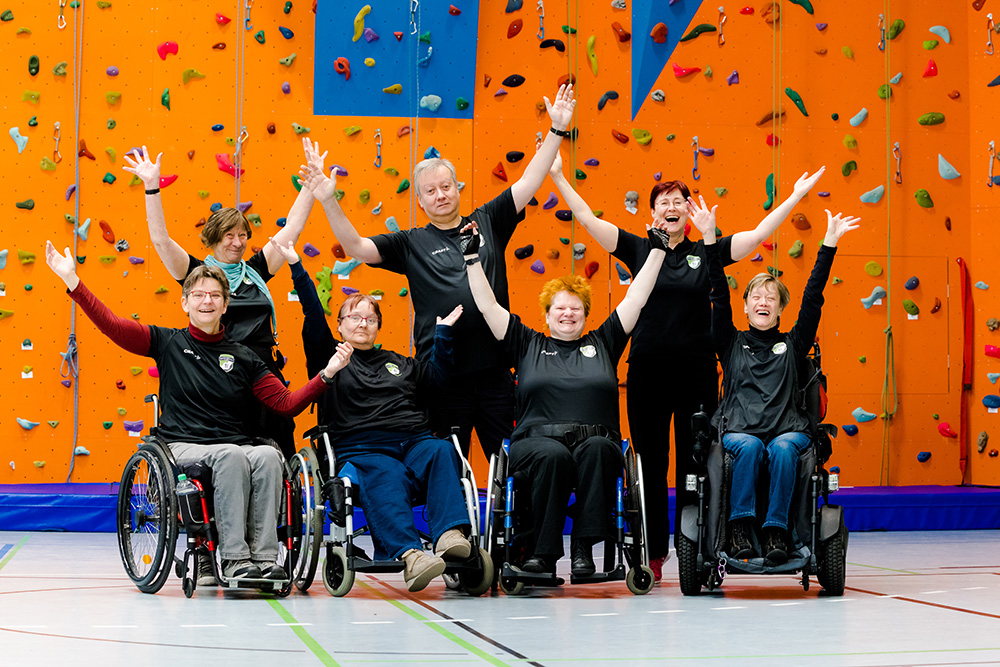
Case 3: Dresden Name of project / programme: Year of start / opening: Country: Target group: Age: City size: Type of sport: Sportverein Motor Mickten – “Sport club Motor Mickten” 1952 / 2023 Germany people with disabilities children, youth, adults, seniors more than 100.000 inhabitants Exercises to enhance general fitness / health, Playful movement Ball games (e.g. soccer, basketball, volleyball….), Dance / creative movement Content of project / programme Short description: The SV Motor Mickten (“sport club Motor Mickten”) offers inclusive training for all age groups, i.e. people with and without disability exercise together. Additionally, a website displays other inclusive sport offers all across the city. An annual Fest der Begegnung (Festival of Dialogue) brings together all kinds of organisations and stakeholders that advocate for inclusion in sport. Long description: The SV Motor Mickten (”sport club Motor Mickten”) is a traditional sport club with a focus on grassroots sport located in the city of Dresden. They are engaged in taping into sport’s potential to foster integration, inclusion and social cohesion. Several years ago, they became aware of the need of inclusive sport opportunities and started their continuous journey of development and learning in that area. They follow an inclusive approach, meaning that people with and without disabilities train together. Examples are inclusive table-tennis classes, classes in “seated volleyball”, wheelchair gymnastics and inclusive kids movement classes. They managed to canvass funding from multiple sources, mainly from the local administration and some NGO foundations. In the beginning, this served to finance singular offers and projects. Eventually, the funding was sufficient to create a job position within the club solely in charge of the field of disabled sport. By now, the newly won members from that area secure this position via membership fees. Meanwhile, the city of Dresden – as all public administration – had started to undergo efforts to introduce measures in order to meet requirements in reference to the UN Convention of the Rights of Persons with Disabilities that entered into force in 2009. The field of sport was one area to focus on and by doing so, city representatives discovered the advances and success the SV Motor Mickten had already made. This way, the SV Motor Mickten became a major partner during the Special Olympics World Games of 2023. Dresden was the host town for the Puerto Rican delegation and a great celebration was organised. The network that got together to organise this festival kept working together from there on and they still realize the Fest der Begegnung (“Festival of Dialogue”) every year. Additionally, SV Motor Mickten realized the project MOVE (Motor Mickten vereint/ “Motor Mickten unites”). MOVE is a website showcasing all kinds of disabled sport opportunities across the city of Dresden – not only the courses by the SV Motor Mickten. The website therefore functions as a platform for disabled sport, enhancing its visibility and accessibility. Besides this, it supports clubs in their efforts to broaden their spectrum of sports, reaching new target groups and becoming more inclusive. Aspects of good practice: The activities of the SV Motor Mickten, especially the festival and the MOVE-website, are considered a good practice because… …they reach the designated target group and create inclusive (training) spaces. …they enhance visibility and accessibility of disabled sports. …they engage in internal and external capacity building. …they share their knowledge. …they manage to be close to financial sustainability. …they communicate their goals (inclusion, anti-discrimination) very clearly. Link to the website Link to the website 2 Copyright: SV Motor Mickten

Germany

Case 2: Berlin B

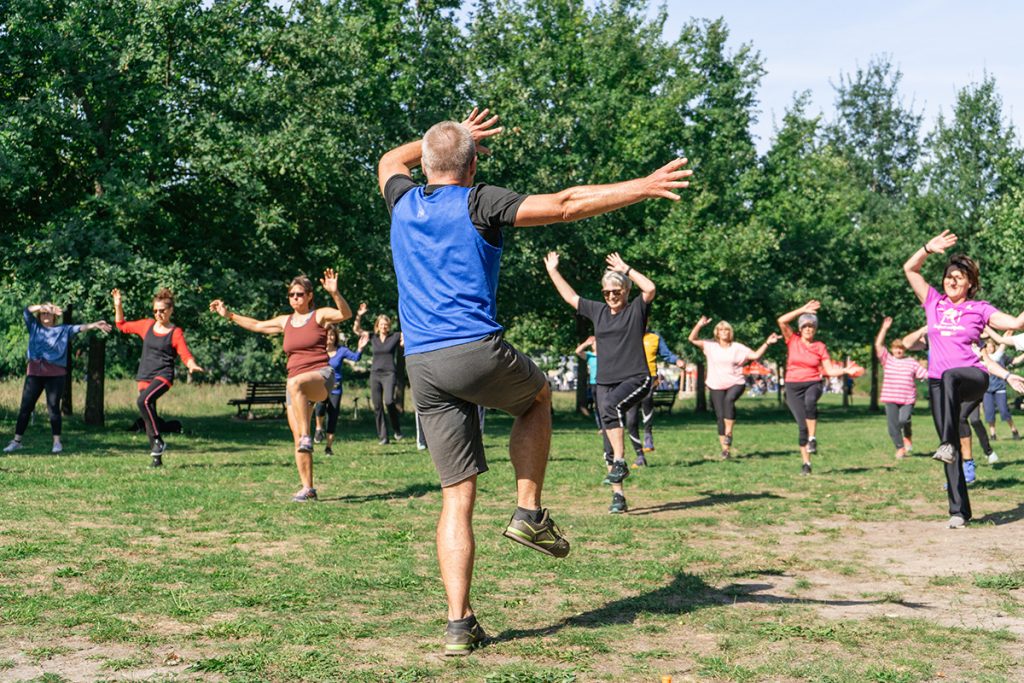
Case 2: Berlin A Name of project / programme: Year of start / opening: Country: Target group: Age: City size: Type of sport: Sport im Park inklusiv – “Sport in the park inclusive” 2017 / 2023 Germany people with disabilities, Social-economically disadvantaged adults, seniors more than 100.000 inhabitants Exercises to enhance general fitness / health, Endurance sport, Playful movement, Ball games (e.g. soccer, basketball, volleyball….), Martial Arts / Combat sports, Dance / creative movement, Yoga / Tai Chi Chuan / Qi Gong Content of project / programme Short description: Sport im Park inclusive (“Sport in the park inclusive”) is a funding programme that enables sport clubs to offer training and exercises in the parks of Berlin. No registration or membership fee is necessary. Coaches are trained to adjust their training for people with (mental) disabilities. Long description: Sport in the park is organized and coordinated by the Senate Administration for the Interior and Sport of the county of Berlin. It is part of the county strategy “Berlin bewegt sich” (”Berlin in motion”) to enhance healthy movement which is run by the Senate Administration for Science, Health and Care. It is a funding programme allowing sport clubs of all kinds to apply in order to offer free-of-charge training sessions in the parks of Berlin. People can join the offer without being a member of a club and without a registration or long-term commitment. This way, the partaking is made very accessible. The range of sports depends on the different sport clubs involved. The courses run from May until October. Then, people have the opportunity to join the club as a member in order to continue the training indoors during the winter. The programme had already been running for a couple of years when the Special Olympics World Games took place in Berlin in 2023. The city of Berlin as the organiser of this event was obliged to come up with a supporting programme alongside the Games. The staff of the Senate Administration ceased this opportunity to further develop their “Sport in the park” programme. In cooperation with the State Sport Association and the Sport Association for Disabled and Rehabilitation sport, they created a qualification programme for the coaches involved with Sport in the park. This qualification enabled them to adjust their training to the special needs that people with (intellectual) disabilities might have in order to join the training classes. Although the offers had been open to everybody and all skill levels beforehand as well, it now has become an essential part of the programme and its communication. Additionally, the sport clubs benefit from the opportunity to gain new members. Since the programme is tendered every year, the pool of sport clubs varies each year keeping a fairly constant number between 10-20 clubs. By now, it contains specialised, self-organised clubs such as a queer sport club or a sport club of the hearing impaired. It shows that the inclusiveness that is aimed for in the target group, is also displayed on a structural level. The programme enables sport clubs of all kinds – and therefore: people of all kinds – to gain visibility and maintain public space. Aspects of good practice: Sport in the park inclusive is considered a good practice, because… …it motivates sport clubs to open up and cater for a new target group. …it catalyses capacity building within the sport clubs. …it shows a relatively high financial sustainability. …staff of the Senate is engaged in creating network structures for knowledge sharing. …has succeeded in involving target groups on a structural level. …undergoes an annual evaluation process (organised internally). Link to the website Credit: SenInnSport

Germany

Case 1: Berlin A

Case: Berlin A Name of project / programme: Year of start / opening: Country: Target group: Age: City size: Type of sport: Sport vernetzt – “Sport connects” 2020 Germany ethnic minority, Social-economically disadvantaged children, youth more than 100.000 inhabitants Exercises to enhance general fitness / health, Playful movement, Ball games (e.g. soccer, basketball, volleyball….) Content of project / programme Short description: Sport vernetzt (“Sport connects”) brings together sport clubs with (nursery) schools in disadvantaged neighbourhoods. Especially trained coaches instruct movement activities for different skill levels that rather focus on joy than competition. Classes take place within and outside of the regular school schedules. Long description: Sport vernetzt (”Sport connects”) is a project run by the Berlin basketball club ALBA Berlin. Back in the 2016, they had established the project “ALBA goes to school” which was later continued and expanded to Sport vernetzt. They started in one particular neighbourhood, Gropiusstadt, and the project since has spread across Berlin and even nationwide involving new partners, new schools and new sport clubs in cities all over Germany. ALBA creates partnerships with schools and nursery schools in neighbourhoods that face socio-economic disadvantages. In these institutions, coaches instruct exercise classes that aim at sparking a lifelong joy of movement and sports. Coaches are trained beforehand to expand their skillset in order to meet the needs that kids from challenging backgrounds (might) have. Therefore, the focus lays on both the children’s social-emotional and physical development. The project is rooted in a strong notion of sport as a catalyst for educational, personal and health development. Facing a lack of personel, schools have realized the benefits they gain from the cooperation. In some cases, Sport vernetzt has taken on the role of a substitute for the – otherwise cancelled – physical education classes. Since the neighbourhoods of interest have such a high demand for these curricular and also extra-curricular classes, ALBA has involved other sports clubs in order to reach as many children as possible. Besides the cooperation with other sport clubs, ALBA has created strong networks in each of the neighbourhoods they are active in: From educational institutions to town quarter management, from youth centers to the local administration as well as local businesses. Recognizing the importance of these networks and their coherent coordination ALBA invests a lot of resources in them. In doing so, they focus on both creating new networks as well as involving themselves into existing ones. This way, they ensure to be present and to be seen by potential partner institutions as well as by their target group. They have established neighbourhood coordinators who function as a contact person for the coaches and for all partners in the respective neighbourhood. The neighbourhood coordinators themselves have regular meetings which strengthen the network across the city and widen perspective. This allows for comparison and taking different aspects and needs of different neighbourhoods into consideration. The project not only enhances sport opportunities for children, but creates an impact on the whole neighbourhood. Meanwhile, the sport clubs involved also undergo a development and learning process, enabling them to better understand the struggles and needs of children living in less privileged conditions. This may result in new regular memberships along the way, but more so, offers clubs the opportunity to redefine their goals and way of approach, so they can contribute to a more just society. Aspects of good practice: Sport connects is considered a good practice, because……it reaches the announced target group.…it acknowledges the importance of inter-sectoral networks. …it ensures that someone is in charge of coordinating established networks. On all levels of the project.…it catalyses capacity building in the sport clubs involved.…knowledge sharing is an active part of the whole project.…it undergoes a constant evaluation (by an external agency). Credit: Konstantin Timm

Scroll to Top