Norway

Norway

Case 6: Stavanger

Case 6: Stavanger Name of project / programme: Year of start / opening: Country: Target group: Age: City size: Type of sport: IM – Lekser – Idrett – Mat (Homwork – Sport – Food) Norway people with disabilities children, youth more than 100.000 inhabitants Other: Multi sports Content of project / programme Short description: Long description: Aspects of good practice: Link to the website

Norway

Case 5: Bergen

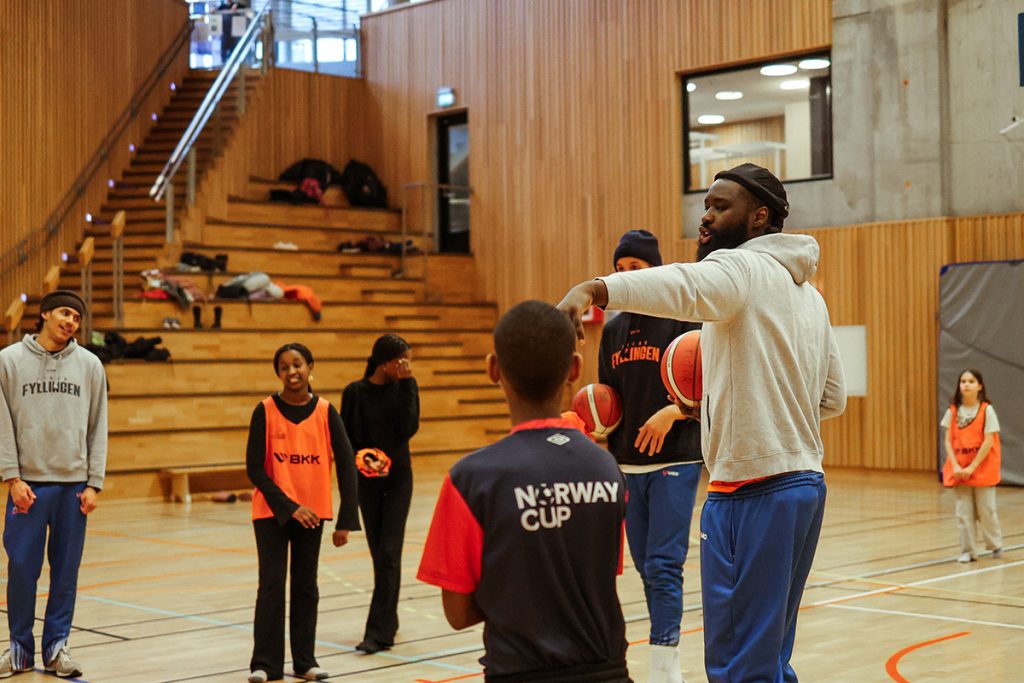
Case 5: Bergen Name of project / programme: Year of start / opening: Country: Target group: Age: City size: Type of sport: IM – Lekser – Idrett – Mat (Homwork – Sport – Food) 2017 Norway Social-economically disadvantaged children more than 100.000 inhabitants Ball games (e.g. soccer, basketball, volleyball….) Content of project / programme Short description: Free of charge, after school activity for children (6-12 years) in parts of Bergen with high numbers of minorities with low socioeconomical status. Collaboration between sport clubs and schools. Long description: This free of charge, after school activity in Bergen started in 2017 at one of the primary schools (Slettebakken Skole). At first it was initiated as a collaboration between the school and one local sport club (Trane), but different sport clubs were invited to participate, giving the children introduction to various sports. By introducing children to various sports and sport clubs, the idea is that the participation in organized sport will increase. The local school, on the other hand, allocated resources for free food and help for the children to do homework. As many of them came from families with minority background, the school experienced that parents had less resources to help their children with homework. By joining forces, the local school and the local sport clubs aimed for better integration. LIM is organized and coordinated by Bergen Sports Council, where resources is allocated for a program coordinator. The program has been funded by the City of Bergen since 2017, but also by other public and private sources. The Sport Council plays an important part in organizing and coordinating the activity, but also when it comes to raising awareness and fundraising. In 2021 the program was extended with one new local school, and then again in 2023. During the academic year of 2024/2025 four different schools and their local sport clubs have been enrolled into the LIM-project. Based on the LIM-projects own calculations, 50-70% of the children in these areas participate in LIM. The City of Bergen is still central in funding the project, and at the same time both sport clubs and the schools allocate resources to run the project. Aspects of good practice: LIM is considered a good practice because… Participation of target group Strong co-ordinator retains overview of activities and people involved Clear goals, e.g. inclusion, empowerment, etc. Link to the website Picture 10: Basketball practice at LIM Bergen. Photo credit: LIM

Norway

Case 4: Kristiansund

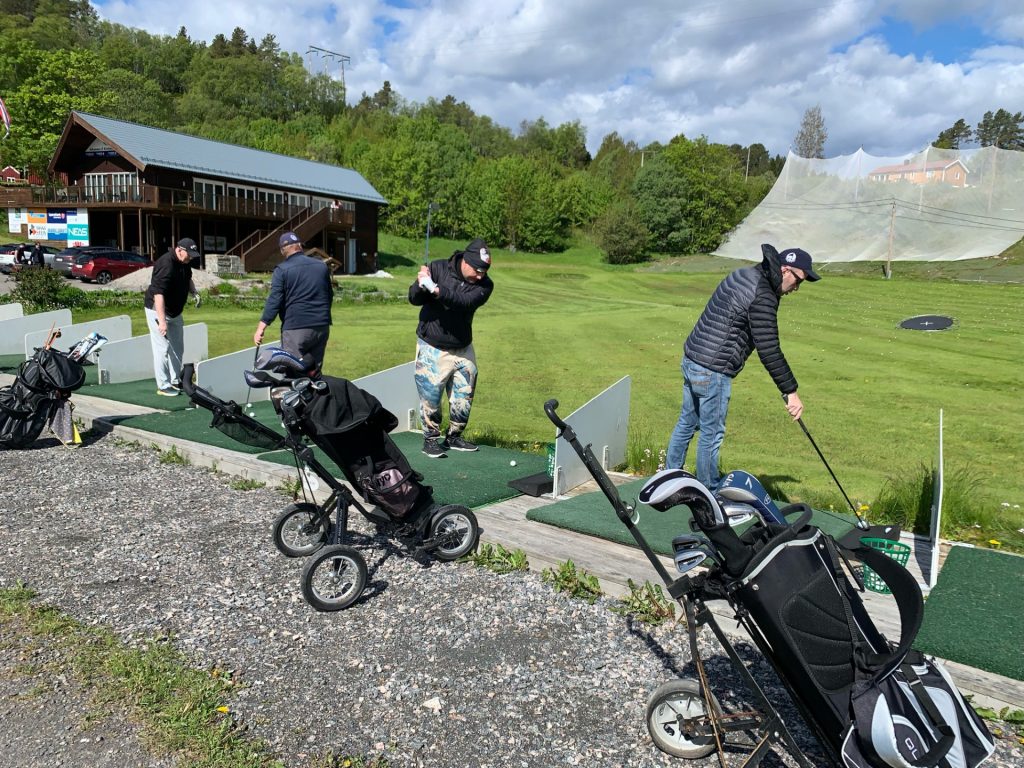
Case 4: Kristiansund Name of project / programme: Year of start / opening: Country: Target group: Age: City size: Type of sport: Ett slag av gangen – Kristiansund 2022 Norway more than 30.000 and less than 100.000 inhabitants Ball games (e.g. soccer, basketball, volleyball….) Content of project / programme Short description: ESAG is a non-profit foundation that uses golf as a coping area for people with different challenges. The socialization and mastery of new skills from regular golf training helps the participants to cope with normal everyday life. Long description: Ett slag av gangen (ESAG) is an association that uses golf as a coping arena for people with drug addiction, mental illness, convicted and released people, young people who experience exclusion and minorities. Golf is therefore used as a means for people with challenges to return to a “normal society”. ESAG is a non-profit association that seeks funds and provides support to golf clubs that want to run activity programs for their target group. Kristiansund Golf Club established ESAG in their club three years ago. In addition to collaborating with ESAG centrally, they collaborate locally with the municipality (Department of Mental Health and Substance Abuse) and the Correctional Service. They are also actively working to establish collaboration with NAV (Norwegian Labour and Welfare Administration). The Department of Mental Health and Substance Abuse provides information about ESAG to people they follow up with. The municipality has also contributed by transporting participants to and from the golf course, especially at the start of the project. Employees from the municipality have also participated as supporters for the participants during training and contributed with their knowledge about the user group. The financial support comes mainly from ESAG centrally, but the golf club in Kristiansund also has its local sponsors. In Kristiansund, there has been a relatively stable group of participants for several years, but new participants are welcome. The group has a fixed training time once a week, also during public holidays. The training takes place both outside on the golf course and inside using golf simulators and ends with socializing and lunch. The trainers are volunteers affiliated with the golf club and one of the participants is now the first to carry out a training course himself. The offer is free for the participants. The club provides equipment. Aspects of good practice: ESAG in Kristiansund is considered a good practice because… Of long-term participation of target group Of meaningful involvement of target group Of stable and regular activity Financial sustainability trough the ESAG foundation Link to the website Picture 7: Ett slag av gangen in Kristiansund. Photo credit: Hildur Mollan Vesterås

Norway

Case 3: Drammen

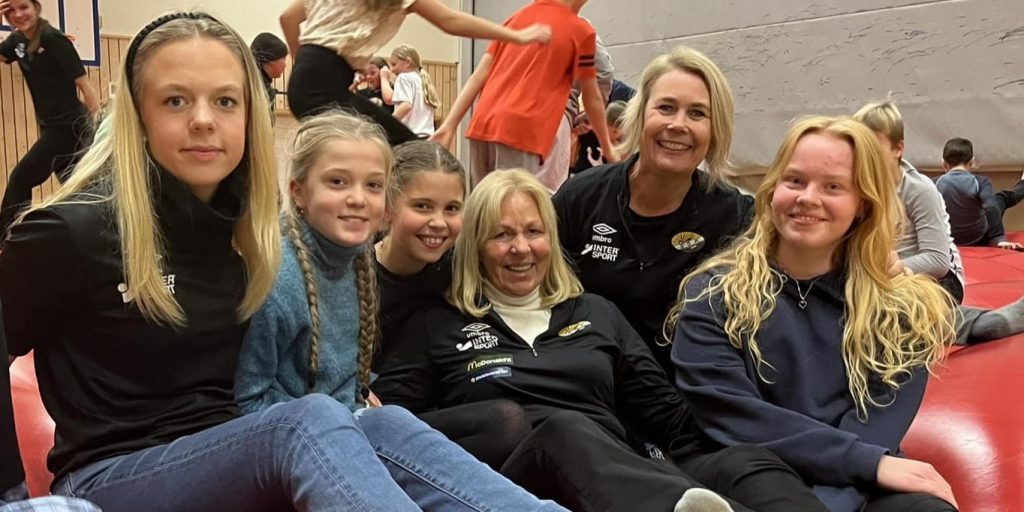
Case 3: Drammen Name of project / programme: Year of start / opening: Country: Target group: Age: City size: Type of sport: DNT Adapted (DNT tilrettelagt) 2014 Norway Social-economically disadvantaged children, youth, seniors more than 100.000 inhabitants Exercises to enhance general fitness / health, Playful movement, Ball games (e.g. soccer, basketball, volleyball….), Bouldering / climbing, Track and field, Snow sports Content of project / programme Short description: “Aktive lokalsamfunn” is a model that involves all the municipality`s districts. The model is mostly based on a collaboration between local sport clubs and their nearby schools and contributes to activity both in- and outside of school. Long description: “Aktive lokalsamfunn” is a model where the schools, sport clubs and volunteers facilitate the joy of movement in primary school age, youth sports on the youth’s terms and the development of local communities with activity across generations. “Aktive lokalsamfunn” is not a fixed model and is constantly evolving and involves many different sports and other activities in the local community. Local resources and facilities are linked together and take responsibility for developing local activities. A characteristic of “Aktive lokalsamfunn” is that the large multi-sports clubs in the municipality take on an extended responsibility for creating increased activity among children and young people. Among other things, professionals from the sport clubs organize various activities and sports in schools and kindergartens regularly. This ensures a more active school day and also lowers the threshold for children to participate in organized sports in their free time. Open sport halls outside of school hours with volunteer guards, as well as services that contribute to activity for the elderly are also part of the model for several of the local communities in the municipality. The confederation of sports and the sports council were central to the start of what would later be called “Aktive lokalsamfunn”. When Drammen Municipality adopted an hour of physical activity in schools in 2014, the confederation of sports and the sports council brought together leaders from the schools and the municipality’s large multi-sports teams to discuss how they could make this possible together. This was the start of a social model where Sport clubs and their local communities take initiatives and ownership of their own projects. The municipal sport council seems to still be a driving force and advisor for the start-up of new local projects. An important foundation for co-creation is also the employment of an activity and community developer in all the large multi-sport clubs. Funds for these positions come from a joint effort from the Municipality, the Sports Council, and foundations. Drammen is a municipality with a high immigrant population and a relatively high proportion of children in low-income families. Drammen also stand out in that significantly fewer young people participate in a leisure organization, including sports. Most of the activities in “Aktive lokalsamfunn” are aimed at children and young people in general. Since the activities are free and offered in schools and in the local environment, it reaches many children from low-income families who might not otherwise participate in sports activities. Aspects of good practice: Aktive lokalsamfunn is considered a good practice because… It has expanded to involve all the city districts in- Drammen. It reaches different kind of target groups including social-economically disadvantaged it shows a high quality of long-term cooperation and co-creation of Meaningful involvement of target group of financial sustainability Link to the website Picture 5: Aktive lokalsamfunn engages children and youth. Photo credit: Aktive Lokalsamfunn

Norway

Case 2: Molde

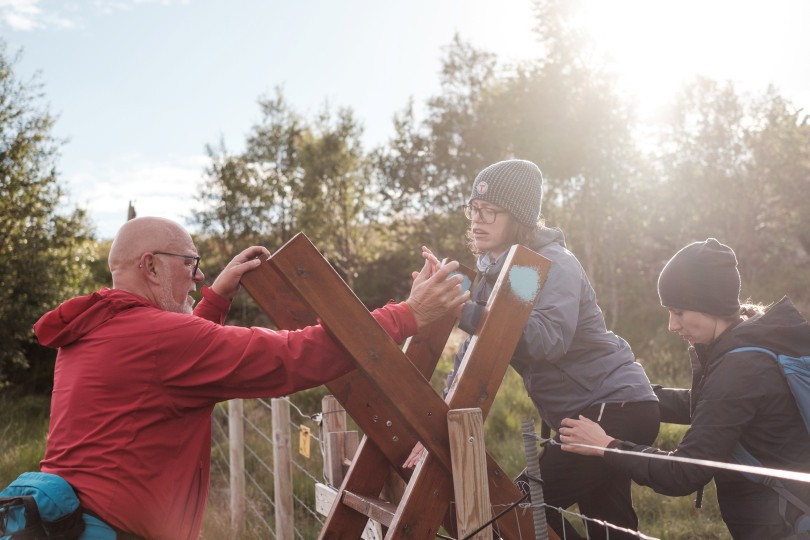
Case 2: Molde Name of project / programme: Year of start / opening: Country: Target group: Age: City size: Type of sport: DNT Adapted (DNT tilrettelagt) 2016 Norway people with disabilities more than 30.000 and less than 100.000 inhabitants Other: outdoor leisure activities Content of project / programme Short description: DNT Adapted gives people with disabilities an opportunity to participate in outdoor leisure activities, with an aim to increase their physical activity and social participation levels. Long description: The Norwegian Trekking Association’s (DNT) local branch, DNT Romsdal, organizes DNT Adapted events every month. The goal of DNT Adapted is that through joint and adapted activities, people with different functional levels can experience an inclusive and good arena for meeting and having fun together with others. The target groups include everyone with different needs for adaptation and their families, friends and support staff. The monthly events are carried out in all seasons of the year, and includes for instance short hikes in the forest, skiing activities, visits to open activity farms etc. The activities are is carried out in the afternoons, which is normally a time of the day with few activities for the target group. DNT Romsdal is collaborating with several local stakeholders depending on the chosen activities. The regional municipality contributes with financial support so that DNT Romsdal can focus on the activities. The regional confederation of sports is contributing to the project by engaging and supporting local sport clubs. An important collaboration partner is the Molde University College and the students from the social care education programme. In addition, volunteers from the target group assist in the implementation of the activities. Aspects of good practice: DNT Adapted is considered a good practice because of: Participation of target group Meaningful involvement of target group High quality of collaboration / co-creation Clear goals, e.g. inclusion, empowerment, etc. Capacity building internal Link to the website Picture 3: Molde: DNT tilrettelagt. Photo credit: DNT

Norway

Case 1: Oslo

Case 1: Oslo Name of project / programme: Year of start / opening: Country: Target group: Age: City size: Type of sport: Idrettshoder (Sports heads) 2020 Norway Social-economically disadvantaged children more than 100.000 inhabitants Other: ice hockey Content of project / programme Short description: Idrettshoder has developed a model for how schools and sports clubs can cooperate in practice, aiming to give all children the opportunity to participate in sports, regardless of family background. Long description: “Idrettshoder” is a project that aims at developing new solutions for recruiting and including children in organized sports in Norway. It emphasises that close cooperation between schools and sports clubs is the key to including more people and aims at developing a model for how schools and sports clubs can cooperate in practice, that can be shared across municipalities in Norway. The “Idrettshoder” model presupposes that sports are an important arena for growing up. For children and young people, sports can be an arena for coping and self-expression. Participating in a sports club can provide unity and friendship for life and strengthen belonging to the local community. Physical activity in childhood lays the foundation for good living habits and life-long health. However, participation in sports is unequal, and children with an immigrant background or from low-income families are often prevented from participating in organized sport. The reasons are multiple, and includes costs related to participation, parental involvement and little knowledge of sports and the Norwegian volunteer model. The “Idrettshoder” project has been developed to overcome these barriers. Through “Idrettshoder”, all children in grades 1-4 have the opportunity to participate in a free activity program under the auspices of the local sports club during after-school hours. “Idrettshoder” has two main goals: To develop and implement a free after-school sports program for children in Oslo and the surrounding area. To develop and disseminate a model for how schools and sports clubs can collaborate to include children in organized sports, regardless of the sport. The core of the model is close collaboration with the schools. By offering activities during school hours, children who are otherwise at risk are reached. The schools know the children and their guardians and can therefore make a targeted effort to include those who do not currently participate in extracurricular activities. “Idrettshoder” started as “Håkkihoder” in 2020. Although the model aims at emphasising sport in general, so far the sport clubs involved has come from ice hockey. Aspects of good practice: Idrettshoder is considered a good practice because of: Participation of target group High quality of collaboration / co-creation Clear goals, e.g. inclusion, empowerment, etc. Link to the website

Scroll to Top