Author name: PolonaFonda

Germany

Case 4: Filderstadt

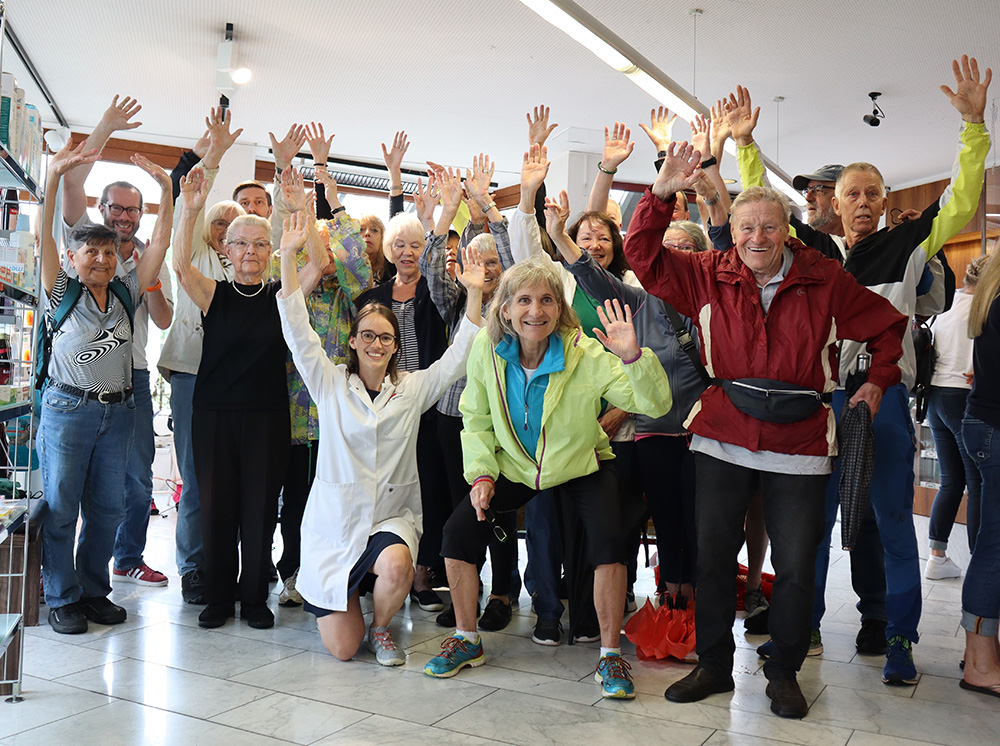
Case 4: Filderstadt Name of project / programme: Year of start / opening: Country: Target group: Age: City size: Type of sport: Bewegte Apotheke – “Pharmacy in motion” 12023 Germany seniors more than 30.000 and less than 100.000 inhabitants Exercises to enhance general fitness / health Content of project / programme Short description: The project Bewegte Apotheke (“Pharmacy in motion“) invites senior citizens to an hour long walk that includes exercises to enhance general fitness and health. Afterwards, participants gather at a pharmacy to have a drink, chat and receive valuable information on health topics. Free of charge. Long description: Every week, participants of the Bewegte Apotheke (“Pharmacy in motion”) gather at the same pharmacy to start their one hour walking tour in the city of Filderstadt. It is free of charge and the participants do not need to register beforehand. While offering the opportunity to chat and socialize, trainers also instruct exercises focusing on strength, balance and coordination. Since the beginning, the participant number is relatively stable at 20. There are always two trainers present, one walking up front, the other one in the back to ensure the groups stays together. This way, different levels of pace and fitness are included and welcome. Afterwards, participants are invited to stay at the pharmacy to have a drink, listen to a talk by the pharmacist on an up to date topic (e.g. flu shots in fall) and socialize. The project takes place in the morning during the regular opening hours of the pharmacy. This way, newly interested people get an impression of the project and participants can combine their partaking with a regular run to the pharmacy (e.g. to hand in a meds prescription). Obviously, the pharmacy and the project benefit mutually: the pharmacy has a chance to hold and gain new clients, whereas the project is advertised at a daily hot spot of its target group. The project is highly attractive for the participants, because it does not require a high level of bodily fitness, but offers an opportunity for conversation and chit-chat which seems to be of great benefit and fosters social inclusion. The idea was introduced by the department of equality, social participation and health of the city of Filderstadt. The staff managed to find coaches (mainly involved with one of the local sport clubs and a local association of sport clubs) who were happy to join. The pharmacist was engaged, as soon as she had read about it in the minutes of a municipal meeting of the health sector. In the aftermath of the Covid-19 pandemic, it took a while until it was all set up for the first go and the project took off in 2023. The financing is relatively secure, since the city takes on the trainers’ allowance, and the pharmacy provides drinks and the time invest for the talk at its own expenses. Aspects of good practice: The project is considered a good practice, because… …it displays an innovative way to reach its target group. …it fosters social inclusion. …it works with low hierarchical structures. …city staff, pharmacist and trainers share their knowledge and communicate well. Link to the website Copyright: Stadt Filderstadt
Germany

Case 3: Dresden

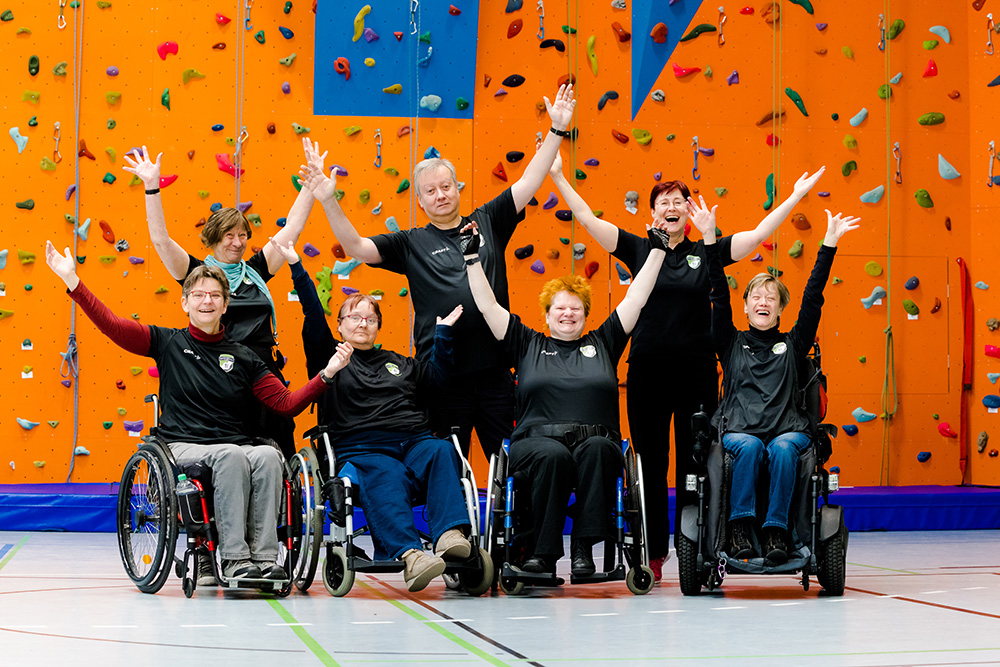
Case 3: Dresden Name of project / programme: Year of start / opening: Country: Target group: Age: City size: Type of sport: Sportverein Motor Mickten – “Sport club Motor Mickten” 1952 / 2023 Germany people with disabilities children, youth, adults, seniors more than 100.000 inhabitants Exercises to enhance general fitness / health, Playful movement Ball games (e.g. soccer, basketball, volleyball….), Dance / creative movement Content of project / programme Short description: The SV Motor Mickten (“sport club Motor Mickten”) offers inclusive training for all age groups, i.e. people with and without disability exercise together. Additionally, a website displays other inclusive sport offers all across the city. An annual Fest der Begegnung (Festival of Dialogue) brings together all kinds of organisations and stakeholders that advocate for inclusion in sport. Long description: The SV Motor Mickten (”sport club Motor Mickten”) is a traditional sport club with a focus on grassroots sport located in the city of Dresden. They are engaged in taping into sport’s potential to foster integration, inclusion and social cohesion. Several years ago, they became aware of the need of inclusive sport opportunities and started their continuous journey of development and learning in that area. They follow an inclusive approach, meaning that people with and without disabilities train together. Examples are inclusive table-tennis classes, classes in “seated volleyball”, wheelchair gymnastics and inclusive kids movement classes. They managed to canvass funding from multiple sources, mainly from the local administration and some NGO foundations. In the beginning, this served to finance singular offers and projects. Eventually, the funding was sufficient to create a job position within the club solely in charge of the field of disabled sport. By now, the newly won members from that area secure this position via membership fees. Meanwhile, the city of Dresden – as all public administration – had started to undergo efforts to introduce measures in order to meet requirements in reference to the UN Convention of the Rights of Persons with Disabilities that entered into force in 2009. The field of sport was one area to focus on and by doing so, city representatives discovered the advances and success the SV Motor Mickten had already made. This way, the SV Motor Mickten became a major partner during the Special Olympics World Games of 2023. Dresden was the host town for the Puerto Rican delegation and a great celebration was organised. The network that got together to organise this festival kept working together from there on and they still realize the Fest der Begegnung (“Festival of Dialogue”) every year. Additionally, SV Motor Mickten realized the project MOVE (Motor Mickten vereint/ “Motor Mickten unites”). MOVE is a website showcasing all kinds of disabled sport opportunities across the city of Dresden – not only the courses by the SV Motor Mickten. The website therefore functions as a platform for disabled sport, enhancing its visibility and accessibility. Besides this, it supports clubs in their efforts to broaden their spectrum of sports, reaching new target groups and becoming more inclusive. Aspects of good practice: The activities of the SV Motor Mickten, especially the festival and the MOVE-website, are considered a good practice because… …they reach the designated target group and create inclusive (training) spaces. …they enhance visibility and accessibility of disabled sports. …they engage in internal and external capacity building. …they share their knowledge. …they manage to be close to financial sustainability. …they communicate their goals (inclusion, anti-discrimination) very clearly. Link to the website Link to the website 2 Copyright: SV Motor Mickten

Germany

Case 2: Berlin B

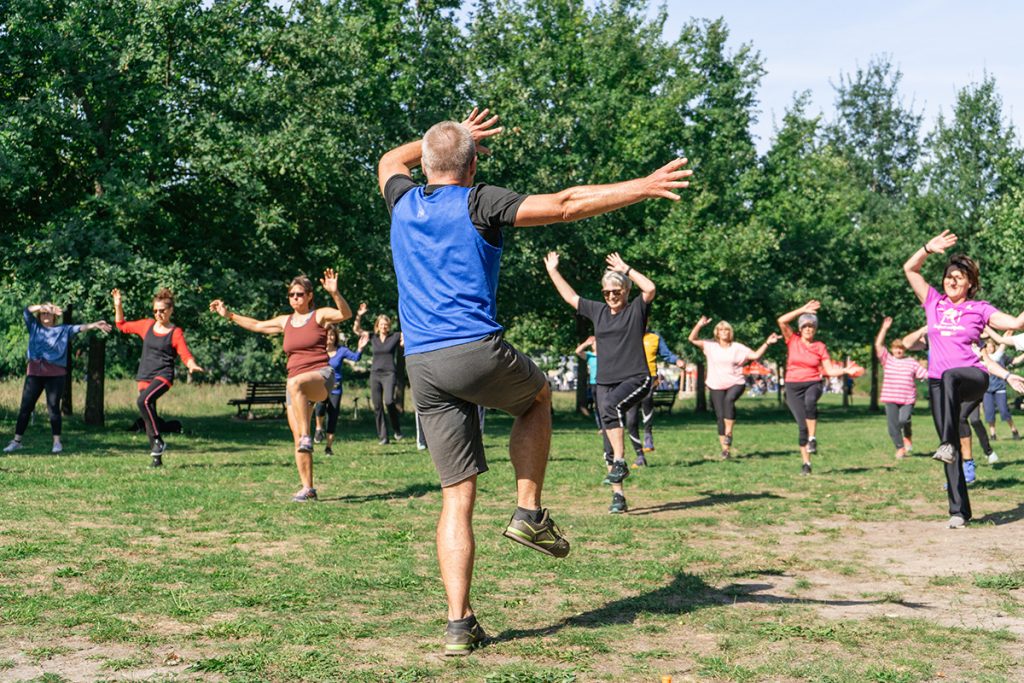
Case 2: Berlin A Name of project / programme: Year of start / opening: Country: Target group: Age: City size: Type of sport: Sport im Park inklusiv – “Sport in the park inclusive” 2017 / 2023 Germany people with disabilities, Social-economically disadvantaged adults, seniors more than 100.000 inhabitants Exercises to enhance general fitness / health, Endurance sport, Playful movement, Ball games (e.g. soccer, basketball, volleyball….), Martial Arts / Combat sports, Dance / creative movement, Yoga / Tai Chi Chuan / Qi Gong Content of project / programme Short description: Sport im Park inclusive (“Sport in the park inclusive”) is a funding programme that enables sport clubs to offer training and exercises in the parks of Berlin. No registration or membership fee is necessary. Coaches are trained to adjust their training for people with (mental) disabilities. Long description: Sport in the park is organized and coordinated by the Senate Administration for the Interior and Sport of the county of Berlin. It is part of the county strategy “Berlin bewegt sich” (”Berlin in motion”) to enhance healthy movement which is run by the Senate Administration for Science, Health and Care. It is a funding programme allowing sport clubs of all kinds to apply in order to offer free-of-charge training sessions in the parks of Berlin. People can join the offer without being a member of a club and without a registration or long-term commitment. This way, the partaking is made very accessible. The range of sports depends on the different sport clubs involved. The courses run from May until October. Then, people have the opportunity to join the club as a member in order to continue the training indoors during the winter. The programme had already been running for a couple of years when the Special Olympics World Games took place in Berlin in 2023. The city of Berlin as the organiser of this event was obliged to come up with a supporting programme alongside the Games. The staff of the Senate Administration ceased this opportunity to further develop their “Sport in the park” programme. In cooperation with the State Sport Association and the Sport Association for Disabled and Rehabilitation sport, they created a qualification programme for the coaches involved with Sport in the park. This qualification enabled them to adjust their training to the special needs that people with (intellectual) disabilities might have in order to join the training classes. Although the offers had been open to everybody and all skill levels beforehand as well, it now has become an essential part of the programme and its communication. Additionally, the sport clubs benefit from the opportunity to gain new members. Since the programme is tendered every year, the pool of sport clubs varies each year keeping a fairly constant number between 10-20 clubs. By now, it contains specialised, self-organised clubs such as a queer sport club or a sport club of the hearing impaired. It shows that the inclusiveness that is aimed for in the target group, is also displayed on a structural level. The programme enables sport clubs of all kinds – and therefore: people of all kinds – to gain visibility and maintain public space. Aspects of good practice: Sport in the park inclusive is considered a good practice, because… …it motivates sport clubs to open up and cater for a new target group. …it catalyses capacity building within the sport clubs. …it shows a relatively high financial sustainability. …staff of the Senate is engaged in creating network structures for knowledge sharing. …has succeeded in involving target groups on a structural level. …undergoes an annual evaluation process (organised internally). Link to the website Credit: SenInnSport

Germany

Case 1: Berlin A

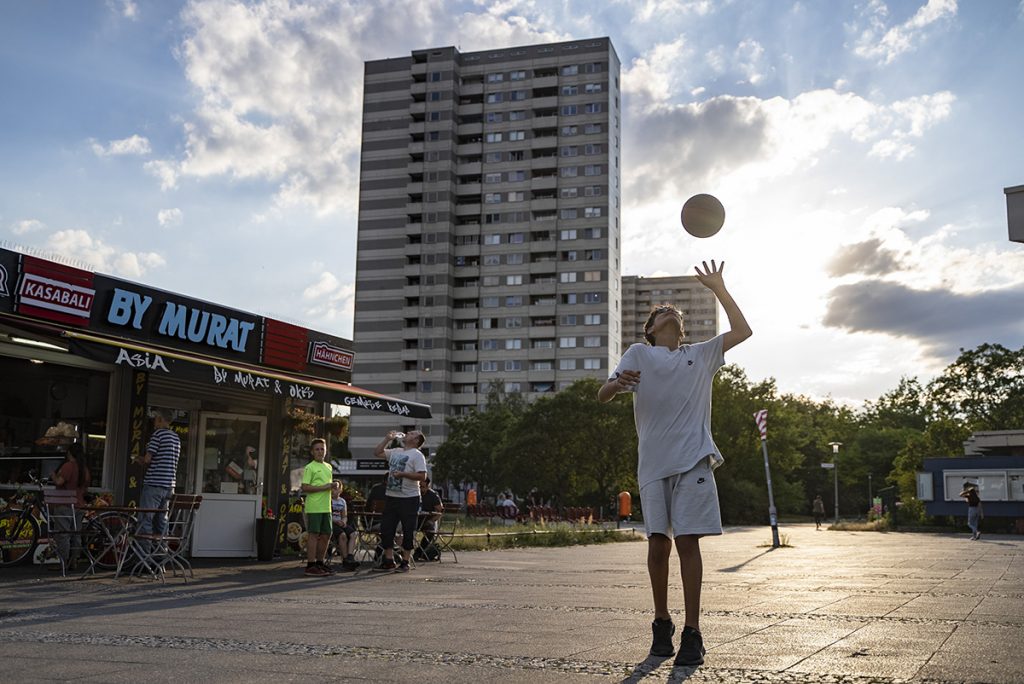
Case: Berlin A Name of project / programme: Year of start / opening: Country: Target group: Age: City size: Type of sport: Sport vernetzt – “Sport connects” 2020 Germany ethnic minority, Social-economically disadvantaged children, youth more than 100.000 inhabitants Exercises to enhance general fitness / health, Playful movement, Ball games (e.g. soccer, basketball, volleyball….) Content of project / programme Short description: Sport vernetzt (“Sport connects”) brings together sport clubs with (nursery) schools in disadvantaged neighbourhoods. Especially trained coaches instruct movement activities for different skill levels that rather focus on joy than competition. Classes take place within and outside of the regular school schedules. Long description: Sport vernetzt (”Sport connects”) is a project run by the Berlin basketball club ALBA Berlin. Back in the 2016, they had established the project “ALBA goes to school” which was later continued and expanded to Sport vernetzt. They started in one particular neighbourhood, Gropiusstadt, and the project since has spread across Berlin and even nationwide involving new partners, new schools and new sport clubs in cities all over Germany. ALBA creates partnerships with schools and nursery schools in neighbourhoods that face socio-economic disadvantages. In these institutions, coaches instruct exercise classes that aim at sparking a lifelong joy of movement and sports. Coaches are trained beforehand to expand their skillset in order to meet the needs that kids from challenging backgrounds (might) have. Therefore, the focus lays on both the children’s social-emotional and physical development. The project is rooted in a strong notion of sport as a catalyst for educational, personal and health development. Facing a lack of personel, schools have realized the benefits they gain from the cooperation. In some cases, Sport vernetzt has taken on the role of a substitute for the – otherwise cancelled – physical education classes. Since the neighbourhoods of interest have such a high demand for these curricular and also extra-curricular classes, ALBA has involved other sports clubs in order to reach as many children as possible. Besides the cooperation with other sport clubs, ALBA has created strong networks in each of the neighbourhoods they are active in: From educational institutions to town quarter management, from youth centers to the local administration as well as local businesses. Recognizing the importance of these networks and their coherent coordination ALBA invests a lot of resources in them. In doing so, they focus on both creating new networks as well as involving themselves into existing ones. This way, they ensure to be present and to be seen by potential partner institutions as well as by their target group. They have established neighbourhood coordinators who function as a contact person for the coaches and for all partners in the respective neighbourhood. The neighbourhood coordinators themselves have regular meetings which strengthen the network across the city and widen perspective. This allows for comparison and taking different aspects and needs of different neighbourhoods into consideration. The project not only enhances sport opportunities for children, but creates an impact on the whole neighbourhood. Meanwhile, the sport clubs involved also undergo a development and learning process, enabling them to better understand the struggles and needs of children living in less privileged conditions. This may result in new regular memberships along the way, but more so, offers clubs the opportunity to redefine their goals and way of approach, so they can contribute to a more just society. Aspects of good practice: Sport connects is considered a good practice, because……it reaches the announced target group.…it acknowledges the importance of inter-sectoral networks. …it ensures that someone is in charge of coordinating established networks. On all levels of the project.…it catalyses capacity building in the sport clubs involved.…knowledge sharing is an active part of the whole project.…it undergoes a constant evaluation (by an external agency). Credit: Konstantin Timm

NEWS

ALLSTARS Conference 2025: Advancing Inclusive Local Sport Policies

Held at the Representation of the State of North Rhine-Westphalia in Brussels on 21 November 2025, the ALLSTARS Conference brought together policymakers from across Europe to discuss how local networks can provide sport and physical activities for all. The ALLSTARS project has focused on identifying and analysing successful local sport policies that promote inclusion and active lifestyles. Its objective has been to explore how local initiatives and governance structures can increase participation in sport. The final conference showcased the project’s findings, shared inspiring examples, and convened policymakers, sport organisations and community actors to discuss future opportunities for inclusive sport at the local level. Opening Remarks The conference opened with welcoming remarks from ENGSO Youth Chair Alessia De Iulis, who emphasised the importance of inclusion and ensuring access to sport for people from all walks of life. First Session: Research Findings The first session featured presentations from the research team behind the project “ALLSTARS – Good Practices for Active Lifestyles in Local Sports Policies.” Each participating country shared key findings such as the high relevance of socio-spatial orientation and the importance of cross-sector cooperation in promoting inclusion, accessibility and active lifestyles. The experts included: During an inspiring networking lunch break, participants had the chance to exchange experiences, ideas and gather more information on the good-practice-projects. Following the networking lunch, an interactive session explored the question: “What do networks need from European institutions in terms of CONTEXTS, ACTORS and PROCESSES?” Participants were invited to share questions and remarks via a Mentimeter and vote on them – the statements with the most votes were taken over to the panel discussion in the third session of the event. High-Level Panel Discussion The conference concluded with a high-level panel moderated by Prof. Jürgen Mittag featuring expert guests: Stanislas Frossard, Head of the Council of Europe’s Sport Division – Speaking from the Council of Europe angle, Mr. Frossard stressed: Hebe Schaillée, Professor, Sport & Society Research Group, Vrije Universiteit Brussel. Prof. Schaillée offered an academic and societal lens, highlighting: Katarzyna Biniaszczyk, Accredited Assistant to MEP Zdrojewski. Representing the European Parliament perspective, Ms. Biniaszczyk highlighted: Iñaki Iturrioz, Head of the Sports Service of the Provincial Council of Gipuzkoa, Spain – Bringing a regional implementation perspective, Mr. Iturrioz emphasised: The ALLSTARS Conference successfully highlighted how local initiatives can drive inclusion, foster active lifestyles, and strengthen the collaboration needed to make sport accessible for all. About ALLSTARS project ALLSTARS – Good practice For Active Life Styles in Local Sport Policies is an EU-funded research project that runs from 2024-2026. It is dedicated to describing and understanding inspiring sport projects and programmes that manage well in catering sport for all on a local level. What kind of networks lead to a more inclusive sports practice?  Which common features can be depicted in otherwise very different projects?  How can municipalities contribute to sport and physical activities for people who are not or do not feel addressed by the regular sport club?  Which role do sport clubs play in this? ALLSTARS aims at both, giving answers to these questions, as well as enabling people from sport organisations and municipal administration to get hands-on information, network opportunities and inspiration.

NEWS

ALLSTARS project team kicks off with national dissemination workshops

On September 12th, the German Sport University Cologne’s Institute of European Sport Development and Leisure Studies (IESF), coordinator of the EU-funded ALLSTARS – Good Practice for Active Lifestyles in Local Sport Policiesproject, hosted a national dissemination workshop titled “Die Stadt, der Sport und der Rand” – The City, Sport, and Marginalised Groups. The event aimed to highlight municipal sports policies that promote “sport for all” and support the integration and participation of marginalised and often underrepresented segments of society. The research team shared the results of their work to date and presented practical examples, which were subsequently discussed with participants. Insights from the broader European context enriched the workshop, particularly through our guest speaker Nathan Geurink from the Mulier Instituut, who provided an overview of the Dutch context. The workshop concluded with a panel discussion moderated by Nora Hespers, featuring Daniela Schneckenburger (Deutscher Städtetag), Pia Strohmeyer (RheinFlanke), Sonny Weishaupt (Landes Sportbund Niedersachsen e.V.), and Volker Anneken (Gold-Kraemer-Stiftung). The discussion painted a comprehensive picture of municipal sports policy and its stakeholders, focusing on both the challenges and the contributions of sports to the integration of marginalised communities.

NEWS

Local sport policies for enhanced sport participation: ENGSO Youth joins the ALLSTARS project

ALLSTARS, Good Practice for Active Lifestyles in Local Sports Policies – Governing the integration of marginalised groups in sports, is a new Erasmus+ collaborative partnership which, under the coordination of the GSU German Sport University, will put special emphasis on identifying and analysing successful local sport policies for enhanced sport participation. The ALLSTARS project first meeting took place at the GSU German Sport University in Cologne, Germany, on 15 February 2024. ENGSO Youth was represented by its Projects and Partnerships manager Nadica Jovanovik. This was the kick-off meeting of the project where the partners discussed the planned activities and deliveries, set timelines and agreed on the next steps. The proposed project’s goal is to identify and analyse successful local sport policies for enhanced sport participation. ALLSTARS will improve participation in sports for those segments of society that are usually underrepresented or excluded. By identifying and understanding good practices for the integration, and through inclusion of the marginalised groups, the aim of the project is to better understand and popularise inclusion through sport policies and programs.  ENGSO Youth is responsible for the dissemination and communication of the project. We will also contribute to the data-collecting process where we will identify best practices in Lithuania when it comes to sport policy creation. At the end of the project we will also organise a local EU conference. In the upcoming months, the project team will focus on data collection about the good practices related to creating policies about sports on a local level in EU countries. In the past, ENGSO Youth led several projects on the topic of inclusion such as Human Rights Education through Sport, Sporting Inclusion and Diversity and Step in for Inclusion. Currently we are also partnering in Best Inclusion project which focuses on the sport sector workforce.

Scroll to Top