Author name: PolonaFonda

Netherlands

Case 7: Rotterdam

Case 7: Rotterdam Name of project / programme: Year of start / opening: Country: Target group: Age: City size: Type of sport: Urban Sports Agenda 2022 Netherlands children, youth more than 100.000 inhabitants Playful movement, Ball games (e.g. soccer, basketball, volleyball….), Martial Arts / Combat sports, Dance / creative movement, Trend sports (Parcours, Skating, Slackline…) Content of project / programme Short description: The Urban Sports Agenda in Rotterdam is a collaborative initiative that has empowered the urban sports scene to shape the city’s urban sports landscape in collaboration with the municipality. By actively involving this community, that is often underrepresented in more traditional sports and policy development, the agenda fosters inclusivity and responsiveness in urban sports policy-making. Long description: The Urban Sports Agenda in Rotterdam is a collaborative policy initiative that empowers the local urban sports scene to co-develop the city’s vision for urban sports and culture. Built on the principle of active citizenship, the agenda gives voice to communities that are often underrepresented in traditional sports structures and policymaking, such as informal groups involved in skateboarding, freerunning, street dance, and 3×3 basketball. To make participation meaningful, the municipality has invested in understanding the language of the urban sports scene and strengthening the local urban sports infrastructure. A key step has been the appointment of neighbourhood sports coaches directly within urban sports organisations. These coaches not only provide daily support for activities but also help build the organisational capacity of grassroots initiatives, enabling them to take on representative roles in the policy-making process. With this support structure in place, the municipality and the urban sports community engage in ongoing dialogue to identify needs, ambitions, and opportunities for development. Rather than designing top-down policy, the Urban Sports Agenda is shaped through a bottom-up process where the expertise and lived experience of urban athletes are central. This has resulted in more tailored and responsive policy that reflects the actual dynamics of the urban sports scene. The agenda places a strong emphasis on inclusion. It actively involves groups that are traditionally less visible in both sport and policy. In addition to policymaking, the initiative supports the creation of inclusive public spaces, event funding, and the facilitation of grassroots programming. The result is a vibrant, community-led approach to sport that encourages ownership, creativity, and long-term engagement. Aspects of good practice: Urban Sports Agenda Rotterdam is considered a good practice, because… … it enables meaningful participation of underrepresented groups in sports policy development, ensuring diverse voices are heard. …it leads to urban sports policy in the municipality that is supported by and tailored to the needs of the urban scene. …it increases access to urban sports, because initiatives are recognised and strengthened. …the municipality has empowered grassroots urban sports organisations by strengthening their capacity through neighbourhood sports coaches.. …it underlines and strengthens the value of urban sports for people. …it has built stronger ties between city government and communities through co-creation. Link to the website

Netherlands

Case 6: Schiedam

Case 6: Schiedam Name of project / programme: Year of start / opening: Country: Target group: Age: City size: Type of sport: YETS 2014 Netherlands Social-economically disadvantaged children, youth, adults more than 30.000 and less than 100.000 inhabitants Ball games (e.g. soccer, basketball, volleyball….) Content of project / programme Short description: YETS (Youth Empowerment Through Sports) is a youth intervention program that uses basketball as a tool to support vulnerable adolescents in their social, emotional, and behavioral development. By combining sports training with homework support, life skills training, and community engagement, YETS aims to prevent social exclusion and promote positive youth development. Long description: YETS (Youth Empowerment Through Sports) is a comprehensive intervention program designed to support vulnerable adolescents in their journey towards social inclusion and personal development. Recognized as a ‘well-founded’ intervention by the Dutch Youth Institute, YETS targets youth aged 12 to 18 who face challenges across multiple life domains, such as academic difficulties, behavioral issues, or social isolation. The program operates within schools, integrating basketball training with various support services for vulnerable young people who often achieve low school results or play a lot of truancy. Participants engage in structured sports sessions led by trained coaches who serve as mentors and role models. These sessions are complemented by homework assistance, life skills training, and discussions on current social topics, fostering a holistic approach to youth development. A key component of YETS is its emphasis on creating a supportive community. The program encourages social integration through group activities and community involvement, helping participants build positive relationships and a sense of belonging. Additionally, each participant has monthly one-on-one meetings with their coach, providing personalized guidance and unconditional support. YETS is implemented over a minimum of two school years, with at least two sessions per week, ensuring sustained engagement and long-term impact. The initiative has demonstrated effectiveness in reducing behavioral problems, improving school performance, and enhancing social participation among its participants. Aspects of good practice: YETS is considered a good practice, because… …it combines sports with educational and social support, addressing multiple aspects of youth development. …it employs trained coaches who act as mentors, providing consistent guidance and positive role modelling. …It fosters a sense of community and belonging among participants, promoting social integration. …It offers a structured and sustained program, ensuring long-term engagement and impact. …It has been recognized and validated by reputable institutions, demonstrating its effectiveness and improving its sustainability. Link to the Facebook

Netherlands

Case 5: Zwolle

Case 5: Zwolle Name of project / programme: Year of start / opening: Country: Target group: Age: City size: Type of sport: Sportpark Styrum – “Sports park Styrum” 2024 Netherlands people with disabilities children, youth, adults more than 100.000 inhabitants Ball games (e.g. soccer, basketball, volleyball….), Other: badminton Content of project / programme Short description: Sport Strijders (‘Sport Warriors’) is an inclusive sports initiative in Zwolle and the broader region, offering adapted korfball and badminton tournaments for individuals with intellectual disabilities. The project aims to provide accessible sports opportunities, fostering social inclusion and promoting physical activity among participants. Long description: Sport Strijders (‘Sport Warriors’) is an inclusive sports project in Zwolle and other places in the Northern and Eastern part of the Netherlands, dedicated to providing adapted korfball and badminton sessions for individuals with intellectual disabilities. The initiative was established to create accessible sports opportunities that promote physical activity, social inclusion, and community engagement. The project works with sport clubs in both korfball and badminton to create four tournaments per year per sport. These tournaments are designed to be inclusive, ensuring that individuals with disabilities can participate and enjoy the benefits of sports. The focus is on skill development, teamwork, personal growth and a joyful ambience, rather than competition. Sport Strijders collaborates with local sports clubs to facilitate the sessions, ensuring a supportive and inclusive environment. It is supported by several other organisations and professionals, such as the province, several municipalities, municipal sport organisations, organisations in education and professionals in adapted sport. Through its activities, Sport Strijders aims to break down barriers to participation in sports for individuals with disabilities, fostering a sense of belonging and promoting a healthier, more active lifestyle. Aspects of good practice: Sport Strijders is considered a good practice, because… …it offers adapted sports sessions that cater to the abilities of individuals with disabilities. …it creates a positive ambience tailored to the needs of individuals with disabilities. …it promotes social inclusion by providing opportunities for individuals with disabilities to engage in sports alongside their peers. …it collaborates with local sports clubs to create eight tournaments per year. …it fosters a sense of belonging and promotes a healthier, more active lifestyle among participants. Link to the Facebook

Netherlands

Case 4: Gorinchem

Case 4: Gorinchem Name of project / programme: Year of start / opening: Country: Target group: Age: City size: Type of sport: Beweegcoach Zorg 2018 Netherlands people with disabilities seniors more than 30.000 and less than 100.000 inhabitants Exercises to enhance general fitness / health Content of project / programme Short description: The Movement Coach Care (‘Beweegcoach Zorg’) in Gorinchem is a collaborative initiative that integrates physical activity into daily care routines for individuals with disabilities or chronic conditions. Rather than directly guiding clients, the coach empowers caregivers to incorporate movement into their interactions, promoting a healthier lifestyle and enhancing overall well-being. Long description: The Movement Coach Care (‘Beweegcoach Zorg’) in Gorinchem is a pioneering project that combines healthcare and physical activity to improve the quality of life for individuals with disabilities or chronic conditions. Launched in 2018, the initiative involves collaboration between several local care organizations alongside the municipality of Gorinchem. The core of the program is the role of the Movement Coach, who works closely with caregivers rather than directly with clients. By training and supporting caregivers, the coach helps them integrate simple physical activities into daily routines, such as encouraging clients to walk short distances, perform stretching exercises, or engage in light strength training during regular interactions. This approach aligns with the concept of ‘positive health,’ focusing on enhancing individuals’ overall well-being rather than solely addressing medical conditions. Regio Online The impact of the Movement Coach Care is significant. With a limited investment of one full-time equivalent, the program reaches approximately 200 clients, fostering a culture of movement within care settings. By embedding physical activity into everyday care practices, the initiative not only improves physical health but also boosts clients’ mood, autonomy, and social participation. Recognizing its success, the Movement Coach Care was awarded the title of ‘Best Initiative in Sports and Physical Activity’ in 2017/2018 by the Association of Sports and Municipalities (Vereniging Sport en Gemeenten). The jury praised the program as a model example of integrating movement into care, emphasizing its simplicity and profound positive effects. In essence, the Movement Coach Care in Gorinchem exemplifies how integrating physical activity into daily care routines can lead to healthier, more engaged individuals and caregivers, contributing to a more inclusive and supportive community. Aspects of good practice: The project is considered a good practice, because… …it integrates physical activity into daily care routines, promoting a healthier lifestyle. …it empowers caregivers to become active participants in clients’ well-being. …it adopts a holistic approach to health, focusing on overall well-being. …it fosters collaboration between healthcare providers and the community. …it has demonstrated measurable positive impacts on clients’ health and quality of life. Link to the website

Netherlands

Case 3: ‘s-Hertogenbosch B

Case 3: ‘s-Hertogenbosch B Name of project / programme: Year of start / opening: Country: Target group: Age: City size: Type of sport: Griepprik Actie 2015 Netherlands people with disabilities seniors more than 100.000 inhabitants Exercises to enhance general fitness / health, Playful movement Ball games (e.g. soccer, basketball, volleyball….), Other: table tennis Content of project / programme Short description: The Flu Shot Action in ’s-Hertogenbosch is an innovative health initiative that combines flu vaccinations with light physical activity for older adults. While waiting for their vaccination, participants engage in fun and accessible games like shuffleboard or table tennis. The project encourages movement, reduces sedentary behavior, and promotes a healthier, more active lifestyle in a familiar setting. Long description: The Flu Shot Action (‘Griepprik Actie’) in ‘s-Hertogenbosch is a unique community initiative that brings together preventive healthcare and physical activity in a low-threshold way. Each year during the flu vaccination campaign, older adults visiting their local general practitioner (GP) practices are invited to participate in short, light physical activities while they wait for their shot. Instead of sitting in line, participants are encouraged to take part in accessible and enjoyable movement games such as table tennis, shuffleboard, or bicycle tire tossing. These activities are guided by friendly volunteers and are carefully designed to be safe and inclusive for people of all fitness levels. The approach is not only entertaining but also effective in raising awareness of the benefits of staying active at any age. The project aims to make movement part of everyday routines, especially for older adults who may face social isolation or physical inactivity. By linking it to the well-known flu shot moment, the initiative uses an existing structure to introduce small but meaningful changes in behavior. The familiar setting of the GP office also helps reduce resistance and makes participation feel natural. The Flu Shot Action is a collaboration between the municipality of ‘s-Hertogenbosch, local GP practices, and community sport providers. It reflects the city’s broader vision of promoting health and vitality through integrated and locally rooted solutions. By connecting health care with sport, the initiative supports both physical well-being and social engagement. More than just a creative twist on the flu shot, the Flu Shot Action acts as a conversation starter about active aging, health, and prevention. It creates a positive experience around healthcare and encourages older adults to continue exploring opportunities to move more in their daily lives. Aspects of good practice: The Flu Shot Action is considered a good practice because… …it creatively combines preventive healthcare with physical activity. … it promotes active aging in a fun, low-threshold way. …it reaches older adults in a familiar and trusted setting. …it strengthens cooperation between healthcare providers and the sport sector.. …it builds awareness of the importance of movement for long-term health. …it contributes to both physical and social well-being. Link to the website

Netherlands

Case 2: ‘s-Hertogenbosch A

Case 2: ‘s-Hertogenbosch A Name of project / programme: Year of start / opening: Country: Target group: Age: City size: Type of sport: City Trainers 2009 Netherlands Social-economically disadvantaged children, youth, adults, seniors more than 100.000 inhabitants Exercises to enhance general fitness / health, Endurance sport, Playful movement Ball games (e.g. soccer, basketball, volleyball….), Martial Arts / Combat sports Dance / creative movement, Yoga / Tai Chi Chuan / Qi Gong, Trend sports (Parcours, Skating, Slackline…) Content of project / programme Short description: City Trainers is a talent development program in Den Bosch that empowers young people and adults to take initiative through sport and culture. Participants receive training in leadership and organisation, enabling them to develop and lead their own activities within the neighbourhood. The programme strengthens community engagement and encourages active citizenship. Long description: City Trainers (‘Citytrainers’) is a social initiative in Den Bosch that supports young people and adults in becoming active leaders in their community through sport, games, and cultural activities. It was launched to stimulate talent development, boost self-confidence, and promote social involvement in various neighbourhoods across the city. Participants—often aged between 14 and 30, but also including motivated adults—follow a structured training programme that teaches them how to set up, organise, and lead community activities. The training includes topics such as communication, responsibility, safety, and working with different target groups. Once trained, City Trainers get the opportunity to develop and carry out their own initiatives, such as neighbourhood sports events, dance workshops, or play afternoons for children. The programme places strong emphasis on empowerment and ownership. It gives participants the tools and confidence to take initiative and contribute positively to their community. Many City Trainers come from the same neighbourhoods they work in, which strengthens their connection with local residents and enhances their role as accessible and relatable role models. City Trainers collaborates closely with schools, youth work, sports clubs, and cultural organisations. The municipality of Den Bosch plays a key role in supporting the programme structurally, recognising its value in fostering civic engagement and social cohesion. The activities take place in community centres, school gyms, public spaces, and cultural venues—making them easily accessible and locally rooted. The impact of the programme is visible on multiple levels. Participants grow personally and professionally, sometimes continuing into paid jobs or volunteer leadership roles. At the same time, the activities they organise contribute to vibrant and inclusive neighbourhoods where residents are more involved and connected. City Trainers is more than a training programme—it is a platform for initiative, responsibility, and positive change, helping to build stronger communities from within. Aspects of good practice: City Trainers is considered a good practice, because… …it empowers young people and adults to take leadership in their own neighbourhoods. …it offers practical training that results in real, self-organised activities. …it fosters personal growth and builds self-confidence. …it is embedded in strong partnerships with schools, youth work, sport and cultural institutions. …it includes both sport and culture, appealing to a broad target group. …it strengthens community cohesion by connecting residents through positive local action. Link to the website

Netherlands

Case 1: The Hague

Case 1: The Hague Name of project / programme: Year of start / opening: Country: Target group: Age: City size: Type of sport: Sporttuin Moerwijk 2013 Netherlands ethnic minority, Social-economically disadvantaged children, youth, adults, seniors more than 100.000 inhabitants Exercises to enhance general fitness / health, Playful movement, Ball games (e.g. soccer, basketball, volleyball….), Dance / creative movement Content of project / programme Short description: Sporttuin Moerwijk (‘Sports Garden Moerwijk’) is a community-based initiative in a neighbourhood with socio-economic struggles. The Sports Garden is supported by the local community and local organisations, helping the project appeal to children and adults and encouraging structural social development. Long description: Sporttuin Moerwijk (‘Sports Garden Moerwijk’) is a community-based initiative in The Hague that uses sport as a tool for empowerment, connection, and development. The project was launched in 2013 in the Moerwijk neighbourhood, an area known for its socio-economic challenges. Since then, it has grown into a vibrant community hub where children, young people, and families come together around sport, play, and learning. The initiative was created as a response to the lack of accessible and safe play spaces in the area. Located on a former schoolyard, “the Sports Garden” was developed into a multifunctional outdoor area with facilities for basketball, football, athletics, and more. It serves as a meeting place, where structured sports activities are offered alongside informal play opportunities. Local coaches, many of whom are role models from the community, lead the sessions. They are trained to not only teach sports but also to offer positive guidance and mentorship to the children. Sports Garden Moerwijk places strong emphasis on social development. Coaches and volunteers aim to foster teamwork, resilience, and self-confidence in young participants. By providing a consistent and safe environment, they also help children develop routines, a sense of belonging, and supportive relationships, particularly important in a neighbourhood where many families face poverty, housing issues, or language barriers. A central element of the initiative is collaboration. Sports Garden Moerwijk works closely with local schools, sport clubs, welfare institutions and the municipality. Schools refer children to the program, while the municipality provides structural support, recognizing the impact of the initiative on both health and social cohesion. The initiative is also embedded in broader neighbourhood development plans, making it part of a long-term strategy to improve living conditions in Moerwijk. To expand its reach and create more opportunities for the youth, Sports Garden Moerwijk partners with other sports clubs and social organisations. It’s not uncommon for children to be introduced to organised sport through the Sports Garden and then take the step to join a regular club. In this way, the initiative serves as a bridge, lowering the threshold for participation in formal sports. Sports Garden Moerwijk does not only benefit children. It actively involves parents and other residents, creating a stronger sense of community ownership and pride. Adults are involved with the project as volunteers for the youth program, but also by exercising themselves in activities focused on adults. As such, Sports Garden Moerwijk is more than a place for sports: it is a catalyst for social inclusion, personal growth, and neighbourhood transformation. Aspects of good practice: Sports Garden Moerwijk is considered a good practice, because… …it reaches the announced target group. …it contributes to social development in a neighbourhood with socio-economic struggles . …it includes more residents than only participants. …it benefits of people with understanding of the local community. …it includes activities with diverse target groups, so it appeals to different types of residents. …it collaborates with schools, sport clubs and other partners that strengthen the project. Link to the website

Germany

Case 7: Oldenburg

Case 7: Oldenburg Name of project / programme: Year of start / opening: Country: Target group: Age: City size: Type of sport: ReWiS – Refugees welcome in sports 2015 Germany refugees, ethnic minority, Social-economically disadvantaged adults more than 100.000 inhabitants Exercises to enhance general fitness / health, Ball games (e.g. soccer, basketball, volleyball….), Dance / creative movement Content of project / programme Short description: Refugees welcome in sports (ReWiS) organises non-competitive ball games and fitness classes. It was funded by the programme integration through sport of the State Sport Association Lower-Saxony from 2017 – 2024. Long description: The ReWiS team offers different courses of ball games, mainly football, volleyball and basketball, taking place at regular sport facilities of the city of Oldenburg. Additionally, a fitness/dance class for women takes place at one of their partner institutions, childcare included. What was meant for refugees in the beginning – a non-competitive sport offer, free of charge, focusing on the social and fun aspect of playing together – had soon proven to be attractive for other people, as well.This led to an expansion of the original target group. There is no membership or registration necessary. People can join without commitment which is highly attractive for people with refugee or unclear residence status since their living situation can change rapidly from one day to another. An annual summer gathering with food and ball games serves as a meeting spot for people who are or used to be involved as trainers or participants, for former refugees who have now started regular jobs and still enjoy coming back to this social event. The project originated in a university seminar at the University of Oldenburg in 2014. Being very aware of the special needs and precarious situation of people with refugee status, the concept included a low-threshold approach in terms of time or financial commitment. The students were able to get in touch with refugee shelters from the area in an early stage of the project which established connection and trust. The information on the flyers and on social media was translated in several languages from the very beginning. This led to an early success of the project which was then continued after the seminar had terminated. This brought along the new challenge to organise new sport venues, because they could not use the ones at the university anymore. In order to be eligible to enter the city’s regular allocation process of sport facilities, the students founded an official sport club. Supported by the City Sport Association, the students invested a lot of voluntary resources into the programme to raise funding and to keep it running. They received several awards for their project. In terms of capacity building, they manage to involve new students via a service-learning seminar at the University. On a structural level, some of the former participants took on the role of trainers themselves and even became official members of the sport club. Some have founded their own football club in order to compete in the local league and play more seriously. Aspects of good practice: Refugees welcome in sports is considered a good practice, because… …it shows high sensitivity for the needs of their target group. …it succeeded in involving the target group on a structural level. …it created a well-functioning network of stakeholders involved with refugees. Link to the website

Germany

Case 6: Münster

Case 6: Münster Name of project / programme: Year of start / opening: Country: Target group: Age: City size: Type of sport: Coerde in Bewegung – “Coerde in motion” 2021 Germany ethnic minority, Social-economically disadvantaged children, youth, adults, seniors more than 100.000 inhabitants Exercises to enhance general fitness / health, Playful movement, Ball games (e.g. soccer, basketball, volleyball….), Dance / creative movement Content of project / programme Short description: Coerde in Bewegung (“Coerde in Motion”) is a programme with a socio-spatial focus in the city of Münster. In cooperation with (nursery) schools and other stakeholders from the social sector of the town quarter, kids get the opportunity to join a wide range of sports. Long description: Coerde in Bewegung (“Coerde in motion”) is a programme initiated by the health department of the city of Münster. It offers a wide range of sports for kids, youngsters and, in one case, a special bike riding meet up for girls and women from diverse backgrounds. Coerde is a town quarter with a low socio-economic status that had caught the municipal administration’s attention, e.g. due to the poor performance in school enrolment examinations. This called for action and the project Coerde in Bewegung was developed. Besides singular bigger events such as football matches at the local sport club or the opportunity for a local school’s football team to join the city’s football tournament, the responsible team also established the well-known concept of “Open Sundays”. This refers to the local school’s gym being opened on Sundays, so that kids with and without their parents can take part in a two-hour movement and play workshop with coaches present. Over time, some participants mastered the transition from participant to coach as they grew older. Therefore, the project succeeded in capacity building and enabled young people to take on a role of responsibility and commitment. The programme shows a strong network focus, trying to establish structures rather than singular projects. Different players from the educational and social sector and their resources are included in order to create various offers and reach different target groups within the quarter. Initiated by the health department, Coerde in Bewegung brought together the City Sport Association and the Association of socio-therapeutic facilities for the development of the programme. For the first three years, 2021-2024, it was financed by the state’s health insurance association. The second phase, another three years, 2024-2027, is financed by a funding mix by the local bank, a company and a private enterprise foundation. Aspects of good practice: Coerde in motion is considered a good practice, because… …an intensive network character brings together diverse players within the quarter and enables to reach the target group(s). …the players involved attend formats of exchange for knowledge sharing and collaboration. …the city has established community workers which are …it allows for capacity building for the institutions involved. …a three-year funding gives relatively sustainability. Link to the website

Germany

Case 5: Mülheim an der Ruhr

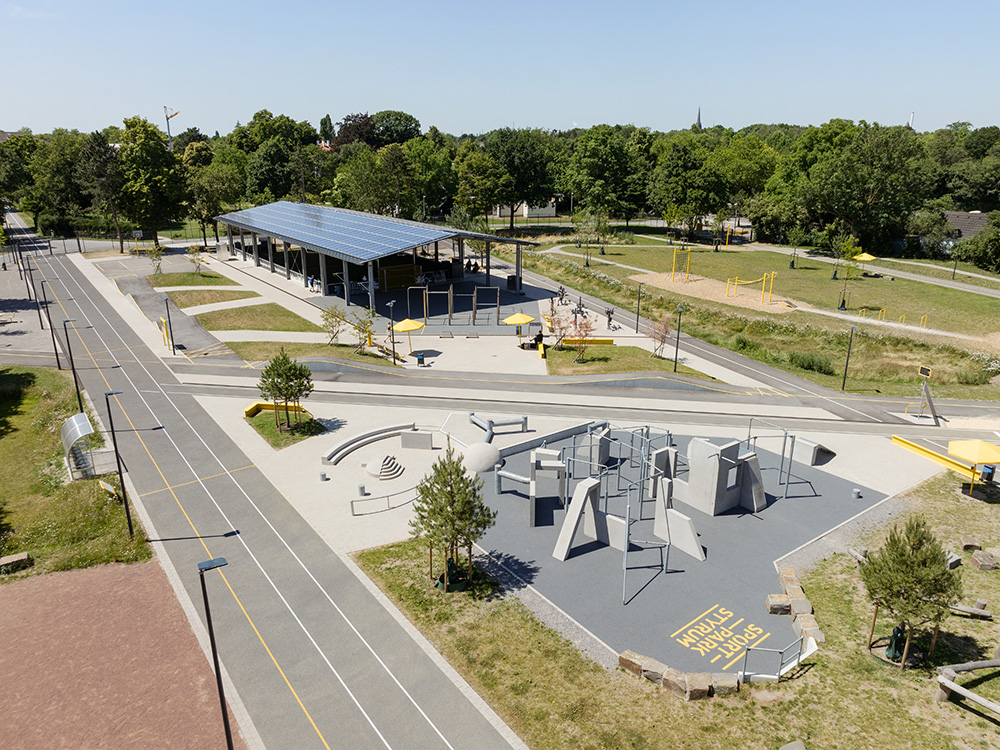
Case 5: Mülheim an der Ruhr Name of project / programme: Year of start / opening: Country: Target group: Age: City size: Type of sport: Sportpark Styrum – “Sports park Styrum” 2022 Germany ethnic minority, Social-economically disadvantaged children, youth, adults, seniors more than 100.000 inhabitants Exercises to enhance general fitness / health, Playful movement, Ball games (e.g. soccer, basketball, volleyball….), Martial Arts / Combat sports, Dance / creative movement, Yoga / Tai Chi Chuan / Qi Gong, Trend sports (Parcours, Skating, Slackline…), Bouldering / climbing, Track and field Content of project / programme Short description: The Sportpark Styrum (“sports park Styrum”) is a multi-functional sport facility well-situated in its town quarter in the city of Mülheim on Ruhr. It is open for individual use as well as for schools, kindergardens, sport clubs and also offers classes, workshops and holiday programs. Long description: The Sportpark Styrum (“Sports park Styrum”)is located right in the Styrum neighbourhood and follows a strong socio-spatial approach run by the Mülheimer SportService. In the morning, the local schools utilize it for their regular physical education classes. In the afternoon, offers by the Mülheimer SportService or other sport clubs are scheduled. It is also open for individual use, be it parents with kids or youngsters playing football in the open-air hall. Sport clubs and companies also use it for their own sport offers. The park is surrounded by a fence which is closed at night time to avoid vandalism. Ever since its planning, the Mülheimer SportService and the architectural planning bureau ensured a high level of participation of the near-by schools and the kindergarden, as well as the local sport club and other stakeholder groups such as local inhabitants or the local Parcour scene. Today, the Mülheimer SportService coordinates the weekly classes, the utilisation of the park by other user groups and as well as special occasions such as the season opening. Most offers are for free, especially the ones for kids. Some courses cost a small amount of money which is solely used to pay trainer allowances. Other expenses are covered by external funding. Two professional care takers ensure that the park remains tidy and that the equipment is used correctly. The team of the Mülheimer SportService is part of a well-functioning network of the quarter involving all kinds of stakeholders, especially from the educational sector. This way, challenges are discussed and ideas for solutions are exchanged. The Sportpark fits well into the quarter’s structure and caters to many people, especially children, who would otherwise not have the chance to get into sports and get to know a wide range of movement practices. Aspects of good practice: The Sportpark Styrum is considered a good practice, because… …it succeeds to realized a socio—spatial approach. …it reaches different kinds of target groups. …it shows a high quality of long-term cooperation and co-creation. …the sharing of knowledge is ensured by a close exchange with stakeholders in the quarter. …it is fairly financially sustainable, since the city of Mülheim managed to secure a job position for it. Link to the website Copyright: Nikolai Benner

Scroll to Top