Case 8: Valencia
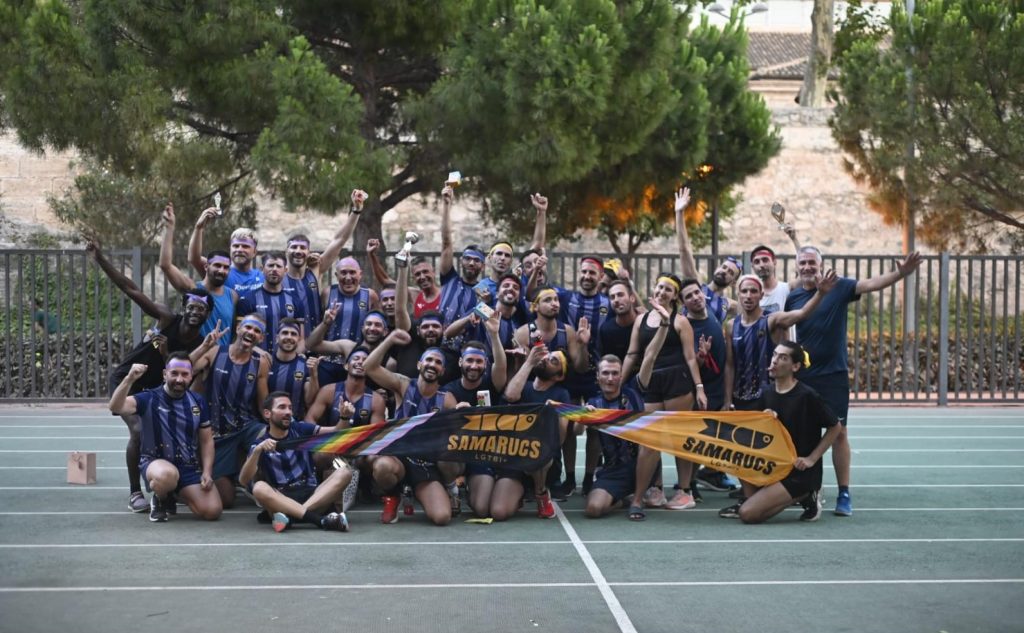
Case 8: Valencia Name of project / programme: Year of start / opening: Country: Target group: Age: City size: Type of sport: Club Deportivo LGTBI+ Samarucs 2003 Spain LGBTQI+ youth, adults more than 100.000 inhabitants Exercises to enhance general fitness / health, Endurance sport, Ball games (e.g. soccer, basketball, volleyball….), Martial Arts / Combat sports, Dance / creative movement, Yoga / Tai Chi Chuan / Qi Gong, Track and field, Water sports Content of project / programme Short description: Samarucs is an LGTBIQ+ sports club that began in 2003 and has grown to 630+ members offering 16 sports. It provides a safe, inclusive environment where sport becomes a tool for personal empowerment and social change. Beyond competitive teams, it fosters community through feminist leadership and programs like their Trans Youth Multisport initiative, transforming traditional sports spaces into welcoming environments for all identities. Long description: From its humble beginnings in 2003 as a small recreational sports group, Club Samarucs has grown into Spain’s benchmark for inclusive sport. What started as a safe space for LGTBIQ+ individuals to play sports without fear of rejection has become a thriving organization with over 630 members across 16 disciplines in 2025. Beyond the numbers, Samarucs represents something deeper – where physical activity transforms into powerful personal and collective empowerment. The club’s essence lies in creating genuinely safe environments that go beyond basic inclusion. As one member explains, “Here you can be who you truly are, without judgment.” This commitment extends beyond LGTBIQ+ specific issues, reflected in their sliding-scale membership fees ensuring no one is excluded due to financial limitations. At Samarucs, inclusion is not just a slogan but a daily practice. Samarucs has cultivated a unique dual identity as both a competitive sports club and community hub. It fields teams in federated leagues for swimming, athletics, volleyball and taekwondo – all proudly bearing LGTBI+ in their official names. Simultaneously, it serves as a social catalyst where sport drives broader change. While members clarify they are “not activists,” their visible presence in public sports facilities is quietly revolutionizing traditional athletic spaces. The club has consistently evolved through innovative programs like their 2021 Trans Youth Multisport initiative. Its gender-balanced leadership team (five women and five men) incorporates feminist perspectives into all operations. This inclusive approach permeates every detail – from communications to facility use – creating welcoming environments that have attracted even non-LGTBIQ+ participants seeking safer sporting spaces. Member testimonials reveal transformative impacts: “Samarucs is family,” shares one athlete. “Here I found myself,” confesses another. These stories illustrate how the club has surpassed its original sporting purpose to become a vital support network. With accessible fees starting at €5 monthly and strong community focus, Samarucs successfully blends athletic professionalism with activism. When Samarucs teams enter municipal sports centers wearing rainbow jerseys or row on the Turia River, they are not just playing sports – they are redefining what it means to belong. Each practice, each competition becomes an act of visibility and a step toward more inclusive communities, transforming historically hostile sports environments into spaces of acceptance and pride. Aspects of good practice: Participation of target group Meaningful involvement of target group Long-term participation Feminist gouvernance Strong co-ordinator retains overview of activities and people involved Good Communication Constant evaluation of project Sustainability Financial sustainability Clear goals, e.g. inclusion, empowerment, etc. Link to the website